The Future of Medical Education With Artificial Intelligence
How AI Is Transforming MBBS Learning, Clinical Training, and Medical Knowledge Management
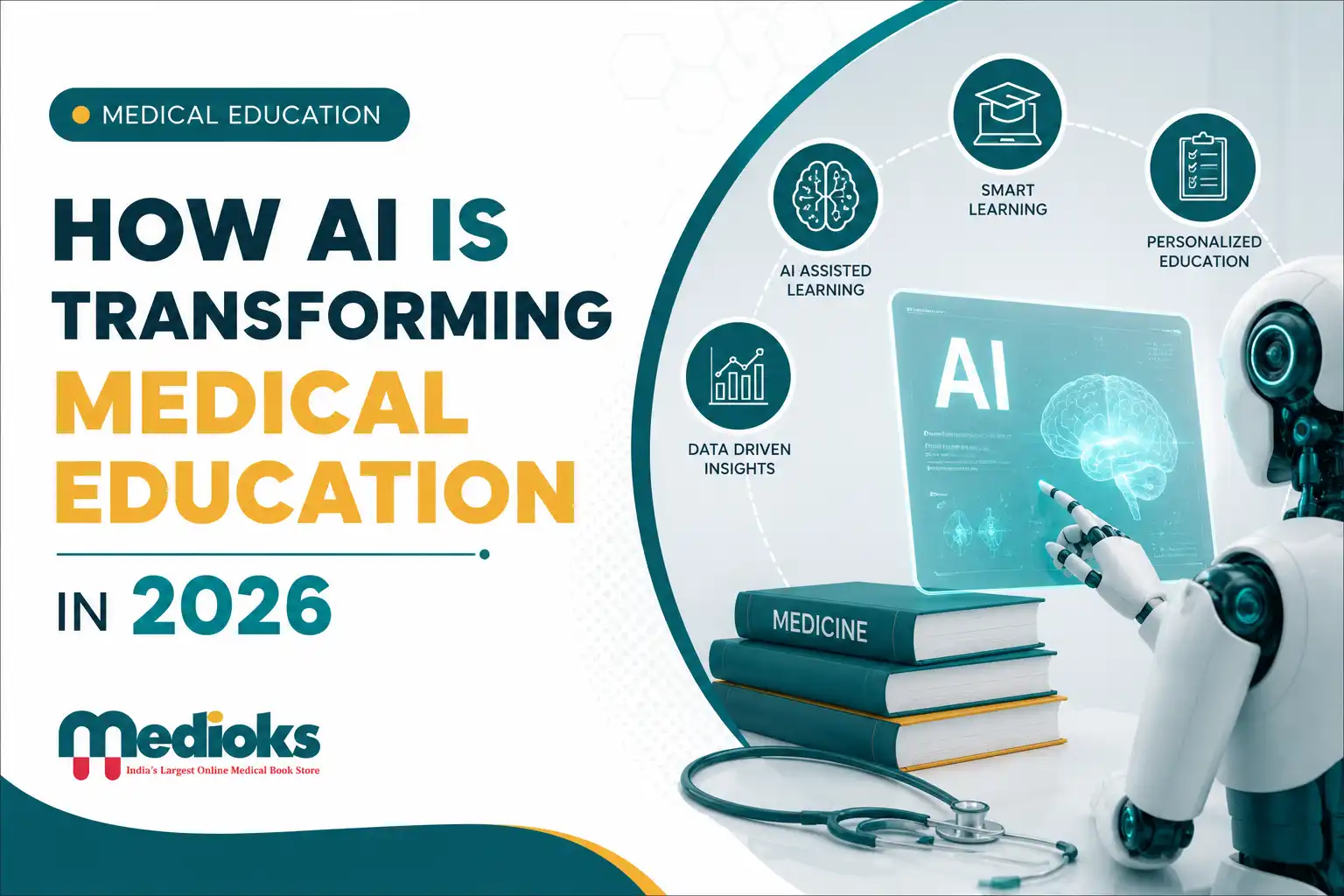
The healthcare industry is experiencing one of the most significant technological transformations in history, and medical education is at the center of this revolution. Artificial Intelligence (AI) is no longer a futuristic concept—it is actively reshaping how medical students learn, how educators teach, and how healthcare professionals develop clinical skills.
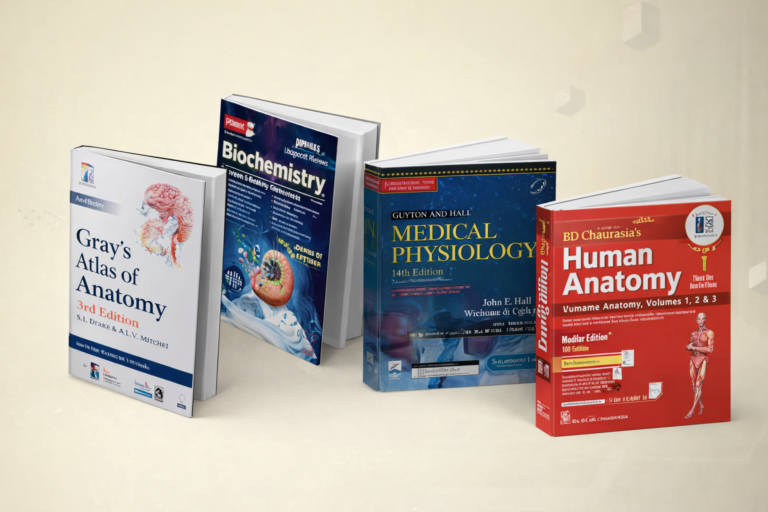
Traditionally, medical students relied heavily on anatomy book for MBBS 1st year, physiology MBBS 1st year book, biochemistry books MBBS, classroom lectures, cadaver dissections, and clinical postings. While these resources remain fundamental, AI is enhancing medical learning by making education more personalized, efficient, and interactive.
Today, students studying from MBBS syllabus books, medicine textbook MBBS, microbiology books for MBBS, and pharmacy textbooks can access AI-powered tools that provide instant explanations, adaptive learning paths, clinical simulations, and intelligent revision systems.
As India prepares for competency-based medical education and examinations such as NEXT, NEET PG, FMGE, and INI-CET, understanding the role of Artificial Intelligence in medical education has become increasingly important.
Why Medical Education Needs AI
Medical knowledge doubles at an unprecedented rate. Every year, thousands of new research papers, treatment protocols, clinical guidelines, and drug updates are published.
Medical students often face challenges such as:
- Information overload
- Time constraints
- Complex clinical concepts
- Retention difficulties
- Exam stress
- Rapidly evolving medical knowledge
Artificial Intelligence helps solve these challenges by providing:
- Personalized learning experiences
- Smart revision systems
- Interactive clinical simulations
- Automated content organization
- Real-time academic support
Rather than replacing traditional education, AI enhances the effectiveness of existing learning methods.
AI-Powered Personalized Learning for MBBS Students
One of the biggest advantages of AI is its ability to customize learning according to individual student needs.
Unlike conventional classrooms where every student follows the same pace, AI platforms analyze:
- Learning patterns
- Performance trends
- Weak subjects
- Study habits
- Revision frequency
Based on this analysis, AI generates customized study plans.
For example, if a student struggles with concepts from microbiology books for 2nd year MBBS but performs well in anatomy, the system may recommend:
- Additional microbiology practice questions
- Interactive visual content
- More revision sessions
- Personalized assessments
This targeted learning approach improves academic performance while reducing study inefficiencies.
The Evolution of Medical Textbooks Through AI
Medical textbooks remain the foundation of healthcare education.
Resources such as:
- Anatomy book for MBBS 1st year
- Physiology MBBS 1st year book
- Biochemistry books MBBS
- General medicine books for MBBS
- Pharmacy textbooks
continue to play a critical role in conceptual learning.
However, AI is transforming how students interact with these textbooks.
Modern AI systems can:
- Summarize lengthy chapters
- Create flashcards automatically
- Generate quizzes
- Explain difficult concepts
- Highlight high-yield topics
- Create mind maps
This helps students extract maximum value from standard textbooks while improving learning efficiency.
AI in Anatomy and Basic Medical Sciences
Anatomy has traditionally been one of the most challenging subjects for first-year MBBS students.
Previously, learning depended largely on:
- Textbooks
- Dissection halls
- Atlases
- Practical demonstrations
AI-powered educational platforms now offer:
- 3D anatomical models
- Virtual dissection tools
- Augmented reality visualization
- Interactive learning modules
Students using an anatomy book for MBBS 1st year can now visualize structures from multiple angles, improving spatial understanding and memory retention.
Similarly, AI applications enhance learning in:
Physiology
Students studying a physiology MBBS 1st year book can access AI-generated physiological simulations that demonstrate:
- Cardiac function
- Respiratory physiology
- Neural pathways
- Endocrine regulation
Biochemistry
AI helps simplify complex biochemical pathways found in biochemistry books MBBS through:
- Interactive diagrams
- Visual explanations
- Smart revision notes
- Automated concept mapping
AI and Clinical Reasoning Development
Clinical reasoning is one of the most important skills for future doctors.
Traditional clinical training relies heavily on:
- Hospital postings
- Bedside teaching
- Case presentations
- Faculty guidance
AI-powered virtual patient simulators now provide additional opportunities for clinical learning.
Students can:
- Assess virtual patients
- Order investigations
- Interpret results
- Formulate diagnoses
- Plan treatments
These systems provide immediate feedback and help students develop clinical thinking before encountering real patients.
This technology is particularly useful for students studying general medicine books for MBBS and medicine textbook MBBS, where clinical application is essential.
AI-Powered Pharmacology Learning
Pharmacology is often considered one of the most challenging medical subjects because of the vast number of drugs, mechanisms, and adverse effects involved.
Students frequently use:
- Pharmacy textbooks
- Drug handbooks
- Clinical pharmacology notes
AI-powered learning systems can simplify pharmacology by:
- Generating drug comparison charts
- Creating memory aids
- Producing personalized quizzes
- Explaining mechanisms visually
These tools improve understanding and retention while reducing memorization burden.
Smart MCQ Preparation Using Artificial Intelligence
Competitive medical examinations increasingly emphasize problem-solving and clinical application.
Students preparing with a medicine MCQ book often struggle to identify weak areas.
AI-based assessment platforms can:
- Analyze mistakes
- Identify performance gaps
- Predict exam readiness
- Generate personalized question banks
Benefits include:
- Faster revision
- Improved accuracy
- Better time management
- Higher exam confidence
This approach is particularly valuable for NEXT, NEET PG, and FMGE preparation.
AI in Microbiology Education
Microbiology involves extensive factual learning, making it one of the more demanding second-year MBBS subjects.
Students studying from:
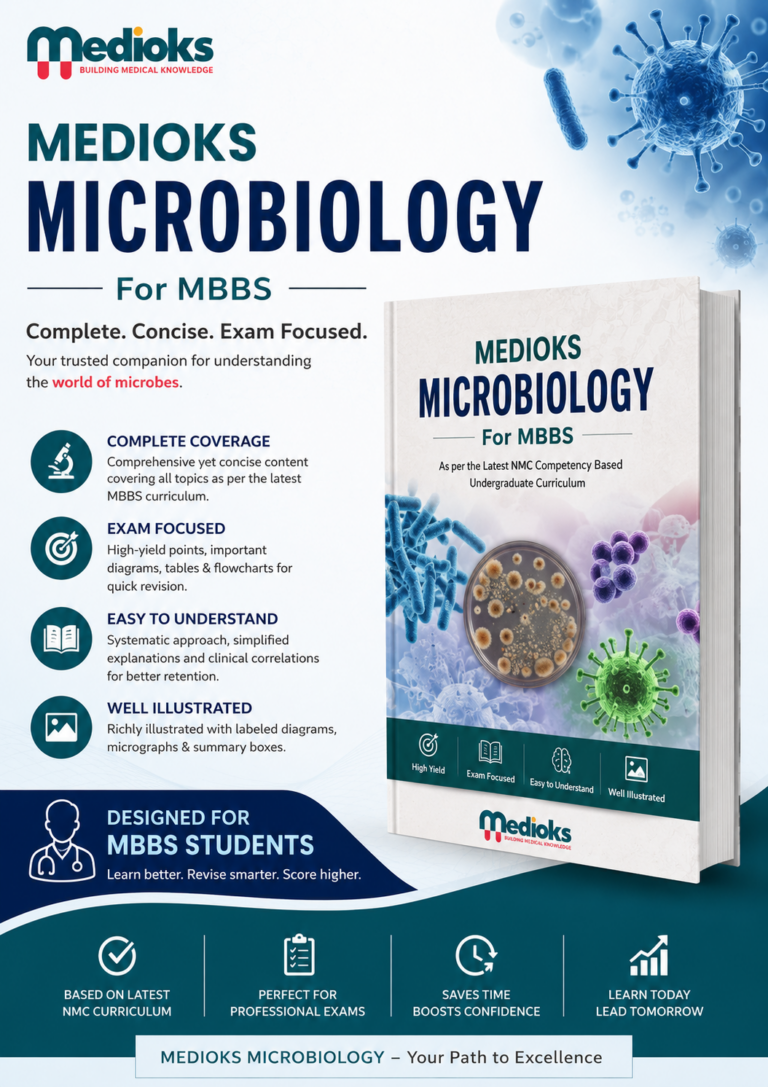
- Microbiology books for MBBS
- Microbiology books for 2nd year MBBS
can benefit significantly from AI-powered educational tools.
AI systems help by:
- Creating organism comparison tables
- Generating mnemonics
- Developing image-based quizzes
- Simplifying pathogen classification
Visual and interactive learning methods improve long-term retention of microbiological concepts.
Research and Evidence-Based Medicine
Modern healthcare increasingly emphasizes evidence-based medicine.
Medical students must learn how to:
- Read research papers
- Interpret clinical studies
- Evaluate evidence quality
- Apply findings clinically
AI-powered research assistants can help by:
- Summarizing scientific literature
- Extracting key findings
- Organizing references
- Identifying relevant studies
This improves academic productivity and encourages research-oriented thinking.
The Role of AI in Future Medical Colleges
Medical schools worldwide are integrating AI into their curricula.
Future AI-enhanced medical education may include:
Intelligent Learning Dashboards
Real-time monitoring of student progress and competency development.
Virtual Clinical Rotations
Immersive patient-care simulations for enhanced clinical training.
AI Tutors
24/7 academic assistance tailored to individual learning needs.
Predictive Learning Systems
Early identification of learning difficulties and personalized interventions.
Advanced Diagnostic Simulations
Exposure to rare clinical cases that students may not encounter during regular postings.
Challenges and Ethical Considerations
While AI offers remarkable opportunities, it also presents challenges.
Information Accuracy
AI-generated content should always be verified against:
- Standard textbooks
- Faculty recommendations
- Clinical guidelines
Overdependence on Technology
Students must continue to develop independent critical-thinking skills.
Data Privacy
Educational institutions must ensure secure handling of student data.
Human Interaction
Medicine remains a human-centered profession, and AI should complement—not replace—teacher-student interactions.
Best Practices for MBBS Students Using AI
To maximize benefits, students should:
Use AI as a Supplement
Continue studying from trusted resources such as:
- Anatomy book for MBBS 1st year
- Physiology MBBS 1st year book
- Biochemistry books MBBS
- Medicine textbook MBBS
- General medicine books for MBBS
- Pharmacy textbooks
- MBBS 3rd year books
Verify Information
Cross-check AI-generated explanations with standard references.
Focus on Conceptual Understanding
AI is most effective when used to strengthen understanding rather than replace learning.
Practice Clinical Application
Combine AI learning with real clinical exposure whenever possible.
Conclusion
Artificial Intelligence is rapidly transforming medical education, creating smarter, more personalized, and highly interactive learning experiences. From enhancing traditional MBBS syllabus books to improving the use of medicine textbook MBBS, microbiology books for MBBS, general medicine books for MBBS, and pharmacy textbooks, AI is helping students learn more effectively than ever before.
However, the future of medical education lies not in replacing traditional learning but in integrating AI with proven educational foundations. Students who combine standard textbooks, clinical experience, evidence-based medicine, and AI-powered tools will be better prepared for examinations, patient care, and lifelong medical practice.
As healthcare enters the era of intelligent technology, AI will become an indispensable partner in shaping the next generation of competent, compassionate, and highly skilled medical professionals.
.