Microbiology Syllabus for MBBS Explained Chapter by Chapter (2026 Guide)
Microbiology is one of the most important subjects taught during the second professional MBBS course. It provides the scientific foundation for understanding infectious diseases, laboratory diagnosis, antimicrobial therapy, immunology, and infection prevention. While many students initially find the subject vast due to the number of microorganisms and disease processes involved, understanding the syllabus chapter by chapter makes preparation significantly easier.
The National Medical Commission (NMC) Competency-Based Medical Education (CBME) curriculum emphasizes conceptual learning, clinical application, and practical laboratory skills rather than rote memorization. This means students need to understand not only the organisms but also their role in disease, diagnosis, treatment, and prevention.
In this comprehensive guide, we’ll explain the MBBS Microbiology syllabus chapter by chapter, discuss the best study approach for each section, recommend standard textbooks, and share practical tips to help you excel in university examinations, NEXT, and NEET PG.
Quick Answer
What Does the MBBS Microbiology Syllabus Include?
The MBBS Microbiology syllabus generally covers:
- General Microbiology
- Immunology
- Bacteriology
- Virology
- Mycology
- Parasitology
- Applied and Clinical Microbiology
- Hospital Infection Control
- Antimicrobial Stewardship
- Practical Microbiology
These topics are taught according to the NMC Competency-Based MBBS Curriculum and are assessed through theory papers, practical examinations, viva voce, and clinical applications.
Why Understanding the Syllabus Matters
Many MBBS students begin studying microbiology without understanding how the chapters are connected. As a result, they spend more time memorizing facts instead of building concepts.
Studying the syllabus systematically helps you:
- Cover every examination topic.
- Build strong conceptual knowledge.
- Improve clinical reasoning.
- Prepare efficiently for practical exams.
- Strengthen your foundation for postgraduate entrance examinations.
Chapter 1: Introduction to Microbiology
The syllabus begins with the fundamentals of microbiology.
Topics include:
- History of microbiology
- Contributions of Louis Pasteur and Robert Koch
- Classification of microorganisms
- Scope of medical microbiology
- Host-microbe relationship
- Normal microbial flora
This chapter introduces the principles that form the basis of all later topics.
Study Tip
Understand the historical discoveries rather than memorizing dates. Focus on how microbiology evolved into modern medical science.
Chapter 2: Bacterial Cell Structure and Physiology
Students learn about:
- Cell wall
- Cell membrane
- Capsule
- Flagella
- Pili
- Spores
- Bacterial growth
- Nutrition
- Metabolism
Understanding bacterial structure is essential because many antibiotics target these cellular components.
High-Yield Topics
- Gram-positive vs Gram-negative bacteria
- Bacterial growth curve
- Spore-forming bacteria
Chapter 3: Sterilization and Disinfection
This chapter is frequently tested in university exams.
Topics include:
- Physical methods of sterilization
- Chemical disinfectants
- Autoclave
- Hot air oven
- Filtration
- Radiation
- Biomedical waste management
Students should understand the indications and mechanisms of each sterilization technique.
Chapter 4: Immunology
Immunology is one of the most conceptually important sections.
Topics include:
- Innate immunity
- Adaptive immunity
- Antigens
- Antibodies
- Complement system
- Cytokines
- Vaccines
- Hypersensitivity
- Autoimmune diseases
- Immunodeficiency disorders
Why It Matters
A strong understanding of immunology helps students learn infectious diseases, vaccines, allergy, and autoimmune disorders.
Chapter 5: Bacterial Genetics
Students study:
- Mutation
- Transformation
- Transduction
- Conjugation
- Plasmids
- Antibiotic resistance mechanisms
These concepts are increasingly important due to the global rise in antimicrobial resistance.
Chapter 6: Systematic Bacteriology
This is the largest section of the syllabus.
Students study medically important bacteria individually.
Common organisms include:
- Staphylococcus
- Streptococcus
- Enterococcus
- Neisseria
- Corynebacterium
- Bacillus
- Clostridium
- Mycobacterium
- Escherichia coli
- Klebsiella
- Proteus
- Pseudomonas
- Salmonella
- Shigella
- Vibrio
- Helicobacter pylori
For each organism, students should learn:
- Morphology
- Habitat
- Virulence factors
- Clinical manifestations
- Laboratory diagnosis
- Treatment
- Prevention
Study Tip
Create comparison tables instead of memorizing organisms separately.
Chapter 7: Virology
Virology focuses on medically significant viruses.
Topics include:
- Viral structure
- Replication
- Laboratory diagnosis
- Vaccination
- Antiviral drugs
Important viruses include:
- Hepatitis viruses
- HIV
- Dengue virus
- Influenza virus
- Rabies virus
- Herpes simplex virus
- Human papillomavirus
- Coronavirus
Clinical correlations are heavily emphasized in the CBME curriculum.
Chapter 8: Mycology
Students study fungal infections caused by:
- Candida
- Aspergillus
- Cryptococcus
- Dermatophytes
- Mucor
Important concepts include:
- Opportunistic fungal infections
- Laboratory diagnosis
- Antifungal drugs
Although smaller than bacteriology, mycology is important for university examinations.
Chapter 9: Parasitology
Parasitology covers protozoa and helminths.
Major topics include:
Protozoa
- Entamoeba histolytica
- Giardia lamblia
- Plasmodium
- Leishmania
- Toxoplasma
Helminths
- Ascaris lumbricoides
- Hookworm
- Taenia
- Wuchereria bancrofti
- Echinococcus
Students should focus on:
- Life cycles
- Modes of transmission
- Clinical features
- Laboratory diagnosis
Flowcharts and diagrams make these topics easier to revise.
Chapter 10: Applied Microbiology
This chapter connects microbiology with clinical practice.
Topics include:
- Healthcare-associated infections
- Hospital infection control
- Specimen collection
- Biomedical waste management
- Antimicrobial stewardship
- Infection prevention
These concepts are increasingly important in modern healthcare settings.
Chapter 11: Practical Microbiology
Practical skills form an essential part of the MBBS curriculum.
Students should become proficient in:
- Gram staining
- Acid-fast staining
- Culture media identification
- Sterilization procedures
- Specimen handling
- Laboratory safety
- Biomedical waste segregation
Practical examinations often include spotters, viva, and demonstration of laboratory techniques.
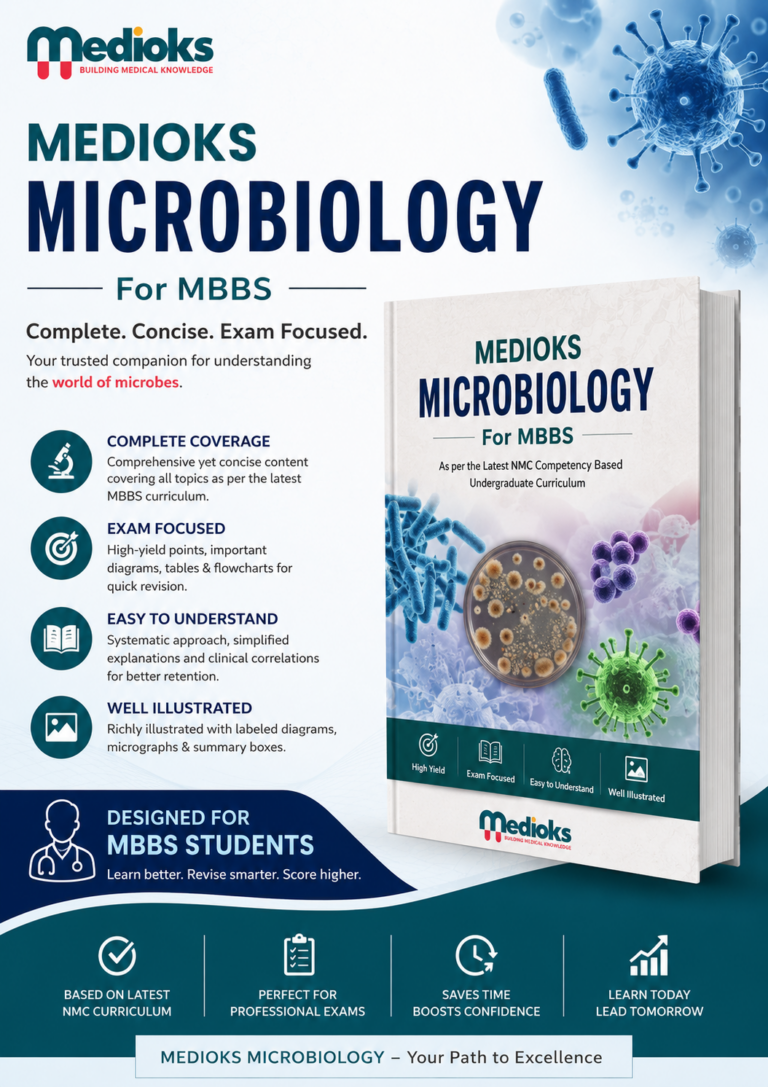
Best Books for MBBS Microbiology
Choosing one reliable textbook is more effective than reading multiple books simultaneously.
Recommended books include:
Essentials of Medical Microbiology – Apurba Sankar Sastry
Ideal for:
- University examinations
- Clinical integration
- Conceptual learning
- NMC CBME curriculum
Ananthanarayan and Paniker’s Textbook of Microbiology
Recommended for:
- Advanced concepts
- Detailed understanding
- NEXT and NEET PG preparation
C. P. Baveja’s Textbook of Microbiology
Useful for:
- Quick revision
- Concise explanations
- Undergraduate preparation
How to Study Each Chapter Effectively
For every organism or disease, follow a consistent pattern:
- Definition
- Morphology
- Transmission
- Pathogenesis
- Clinical features
- Laboratory diagnosis
- Treatment
- Prevention
Using the same framework for every chapter improves retention and revision speed.
Common Mistakes MBBS Students Make
Avoid these common preparation mistakes:
- Reading multiple textbooks simultaneously.
- Ignoring immunology.
- Memorizing without understanding concepts.
- Skipping practical sessions.
- Avoiding previous-year question papers.
- Delaying revision until the final week.
A structured, chapter-wise approach is far more effective.
Why the MBBS Microbiology Syllabus Matters for NEXT and NEET PG
The concepts learned in microbiology extend beyond university examinations.
They form the basis of:
- Infectious disease diagnosis
- Rational antibiotic use
- Vaccine science
- Public health
- Laboratory medicine
- Internal medicine
- Pediatrics
- Community medicine
Strong microbiology fundamentals improve performance in NEXT, NEET PG, and future clinical practice.
Frequently Asked Questions
Is microbiology difficult in MBBS?
Microbiology becomes manageable when studied chapter by chapter. Understanding disease mechanisms and laboratory diagnosis is more effective than rote memorization.
Which microbiology book is best for MBBS?
Essentials of Medical Microbiology by Apurba Sankar Sastry is one of the most recommended textbooks for undergraduate students. Ananthanarayan and Paniker is an excellent reference for advanced learning.
Which chapter is most important?
Bacteriology, Immunology, Sterilization, Virology, Tuberculosis, Antimicrobial Resistance, and Hospital Infection Control are among the highest-yield topics for university examinations.
Are practicals important?
Yes. Practical microbiology is an integral part of the MBBS curriculum and contributes significantly to university examinations and clinical competency.
Can this syllabus help with NEET PG?
Absolutely. The MBBS microbiology syllabus forms the foundation for infectious diseases, immunology, and microbiology questions in NEXT and NEET PG.
Conclusion
The MBBS Microbiology syllabus is comprehensive but highly rewarding when approached systematically. By understanding each chapter—from General Microbiology and Immunology to Bacteriology, Virology, Mycology, Parasitology, and Applied Microbiology—you build a strong scientific foundation that supports clinical medicine throughout your medical career.
Instead of memorizing isolated facts, focus on understanding concepts, laboratory diagnosis, and disease mechanisms. Study from one trusted textbook, revise consistently, practice diagrams and previous-year questions, and actively participate in practical sessions. This approach will not only help you score well in university exams but also prepare you for NEXT, NEET PG, and lifelong medical practice.