Best MBBS Books Recommended by Professors (2026 Expert Guide)
Choosing the right textbooks is one of the most important decisions an MBBS student can make. While there are hundreds of medical books available in the market, experienced professors consistently recommend a select group of textbooks that offer the ideal balance of conceptual clarity, clinical relevance, and exam-oriented content.
Whether you’re entering your first year or preparing for your final professional examinations, using professor-recommended books can help you understand difficult concepts, score higher in university exams, and build a solid foundation for NEET PG, NEXT, and clinical practice.
In this guide, we’ll explore the best MBBS books recommended by professors across every major subject, along with tips on selecting the right editions and avoiding common mistakes.
Quick Answer
Best Anatomy Book
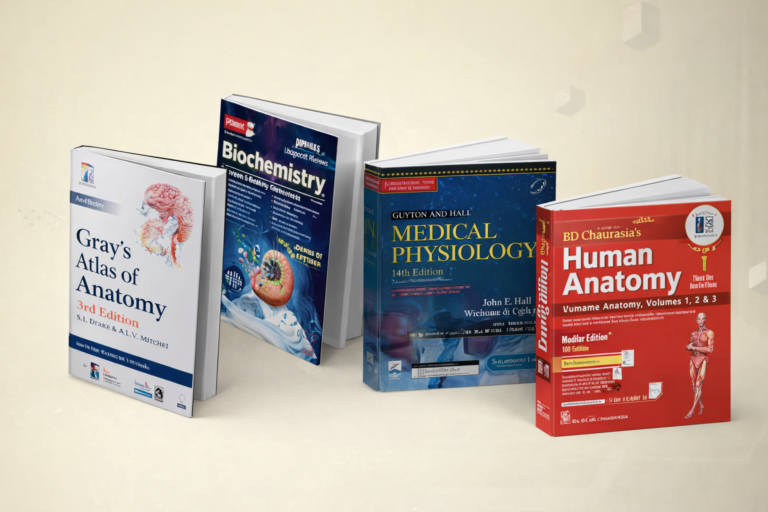
BD Chaurasia’s Human Anatomy
Best Physiology Book
Guyton and Hall Textbook of Medical Physiology (Concepts) + AK Jain Physiology (University Exams)
Best Biochemistry Book
Lippincott Illustrated Reviews: Biochemistry
Best Pathology Book
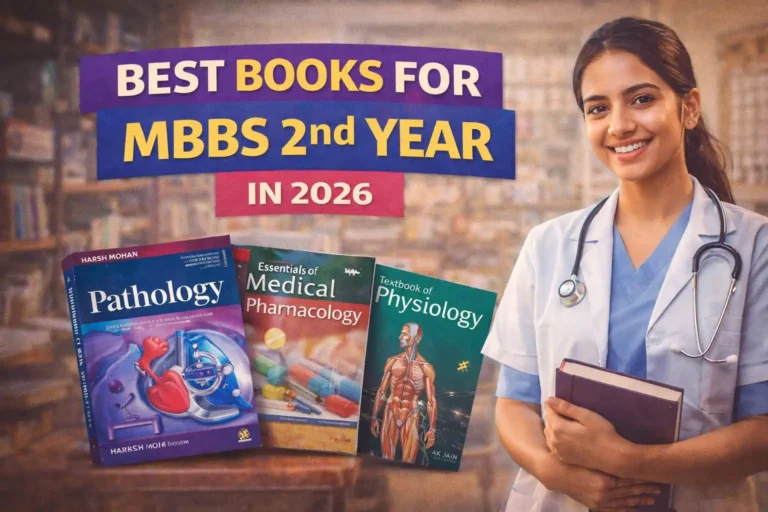
Harsh Mohan’s Textbook of Pathology
Best Pharmacology Book
KD Tripathi’s Essentials of Medical Pharmacology
Best Microbiology Book
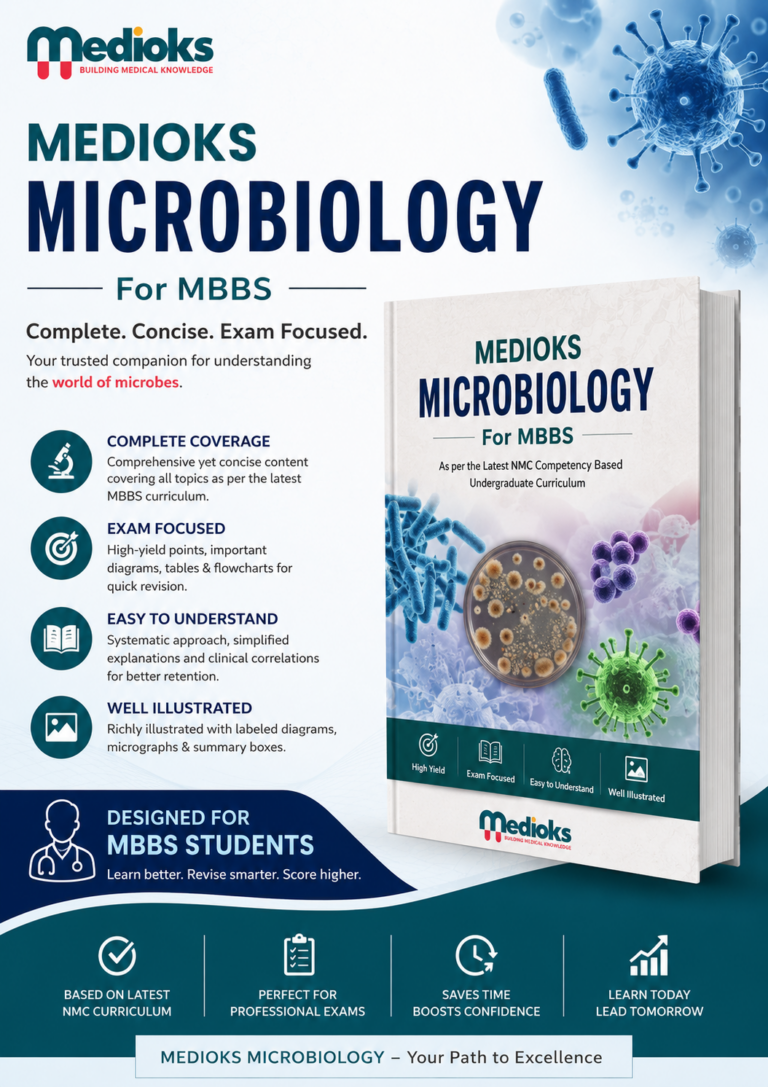
Apurba Sastry’s Essentials of Medical Microbiology
Best Medicine Book
Davidson’s Principles and Practice of Medicine
Why Professors Recommend Standard MBBS Textbooks
Medical faculty recommend textbooks based on years of teaching experience and student performance.
These books are selected because they:
- Cover the complete NMC Competency-Based Medical Education (CBME) syllabus
- Explain concepts clearly
- Include clinical correlations
- Support practical and viva preparation
- Help students prepare for university exams and postgraduate entrance tests
Rather than relying only on notes or PDFs, professors encourage students to study from standard textbooks.
Best MBBS Books by Subject
1. Anatomy
Anatomy forms the foundation of medical science and requires strong conceptual understanding.
Recommended Books
- BD Chaurasia’s Human Anatomy (Volumes 1–3)
- Gray’s Anatomy for Students (Reference)
- Snell’s Clinical Anatomy (Clinical correlation)
Why Professors Recommend Them
- Clear illustrations
- Region-wise organization
- Clinical application sections
- Alignment with first-year MBBS syllabus
Best For: First-year MBBS students and anatomy practical examinations.
2. Physiology
Understanding normal body functions is essential before studying diseases.
Recommended Books
- Guyton and Hall Textbook of Medical Physiology
- AK Jain Physiology
- GK Pal Practical Physiology
Why Professors Recommend Them
- Strong conceptual explanations
- Clinical examples
- Well-structured diagrams
- Practical experiment coverage
Best For: Building concepts and preparing for physiology practicals.
3. Biochemistry
Biochemistry connects basic science with clinical medicine.
Recommended Books
- Lippincott Illustrated Reviews: Biochemistry
- Satyanarayana Biochemistry
- Rebecca James Practical Biochemistry
Key Benefits
- Simplified metabolic pathways
- Clinical case discussions
- High-quality illustrations
4. Pathology
Pathology explains how diseases develop and affect the body.
Recommended Books
- Harsh Mohan’s Textbook of Pathology
- Robbins Basic Pathology (Reference)
Why Professors Prefer These Books
- Excellent illustrations
- Clinical integration
- Strong conceptual foundation
- Suitable for university exams and NEET PG
5. Pharmacology
Understanding drugs and therapeutics is essential for every future doctor.
Recommended Books
- KD Tripathi’s Essentials of Medical Pharmacology
- Shanbhag Pharmacology
Advantages
- Easy language
- Updated drug information
- Clinical pharmacology focus
- Excellent flowcharts
6. Microbiology
Microbiology teaches students about infectious diseases and laboratory diagnosis.
Recommended Books
- Apurba Sastry’s Essentials of Medical Microbiology
- Ananthanarayan and Paniker’s Textbook of Microbiology
- C. P. Baveja’s Textbook of Microbiology
Why Professors Recommend Them
- CBME alignment
- Clinical case discussions
- Practical microbiology support
- Strong conceptual explanations
7. Forensic Medicine
Understanding medical law and toxicology is an important part of the MBBS curriculum.
Recommended Books
- Parikh’s Textbook of Medical Jurisprudence and Toxicology
- Reddy’s Essentials of Forensic Medicine
8. Ophthalmology
Recommended Books
- Kanski Clinical Ophthalmology
- Khurana Comprehensive Ophthalmology
These books combine theory with image-based learning and clinical relevance.
9. ENT (Otorhinolaryngology)
Recommended Books
- Dhingra’s Diseases of Ear, Nose and Throat
- Zakir Hussain ENT
Both are widely recommended for undergraduate learning and university examinations.
10. Obstetrics & Gynaecology
Recommended Books
- DC Dutta’s Textbook of Obstetrics
- DC Dutta’s Textbook of Gynecology
- Shaw’s Textbook of Gynaecology
These books are trusted for their clinical orientation and exam-focused content.
11. Pediatrics
Recommended Book
Ghai Essential Pediatrics
Known for:
- Child-friendly clinical explanations
- Growth and development charts
- Vaccination schedules
- Pediatric disease management
12. Orthopedics
Recommended Book
Maheshwari Orthopedics
Highly recommended because of:
- Easy language
- Clinical photographs
- Examination-focused approach
13. General Medicine
Recommended Books
- Davidson’s Principles and Practice of Medicine
- Harrison’s Principles of Internal Medicine (Reference)
Davidson is ideal for MBBS students, while Harrison is preferred for advanced learning.
14. General Surgery
Recommended Books
- Bailey & Love’s Short Practice of Surgery
- SRB Manual of Surgery
These books provide an excellent balance between theory and clinical application.
Why Professors Prefer Standard Textbooks
Experienced faculty often discourage depending solely on coaching notes.
Standard textbooks help students:
- Understand concepts rather than memorize facts
- Build strong clinical reasoning
- Prepare for viva examinations
- Develop long-term medical knowledge
- Perform better in NEET PG and NEXT
How to Choose the Right MBBS Book
Before buying a textbook, consider:
NMC CBME Alignment
Choose books that follow the latest Competency-Based Medical Education curriculum.
Latest Edition
Updated editions include current treatment guidelines and revised content.
Clinical Correlation
Books with clinical cases improve understanding and application.
Practical Utility
Subjects like Anatomy, Physiology, and Microbiology require dedicated practical manuals.
Readability
Select books that match your learning style and academic level.
Common Mistakes MBBS Students Make
- Buying too many textbooks for the same subject
- Ignoring practical manuals
- Using only handwritten notes
- Purchasing outdated editions
- Focusing only on exam guides instead of standard textbooks
Studying one standard book thoroughly is often more effective than reading multiple resources superficially.
Experience
Authored by experienced clinicians and educators.
Expertise
Written by subject specialists with years of academic and clinical experience.
Authoritativeness
Widely prescribed by professors across Indian medical colleges.
Trustworthiness
Evidence-based, peer-reviewed, and regularly updated.
Following professor-recommended textbooks helps students access reliable medical knowledge.
Frequently Asked Questions
Which MBBS books do professors recommend the most?
Professors commonly recommend BD Chaurasia, Guyton & Hall, Harsh Mohan, KD Tripathi, Apurba Sastry, Davidson, and Bailey & Love because of their accuracy and clinical relevance.
Is one textbook enough for each subject?
Yes. Most students can perform well with one standard textbook supplemented by practical manuals and class notes.
Which microbiology book do professors recommend?
Apurba Sastry is widely preferred for undergraduate study, while Ananthanarayan and Paniker is recommended for advanced conceptual learning.
Are international books necessary?
Not always. Indian textbooks are generally better aligned with the NMC curriculum and university examination patterns.
Should I buy the latest edition?
Yes. The latest editions often contain updated clinical guidelines, revised treatment protocols, and improved illustrations.
Conclusion
Selecting the right MBBS textbooks is one of the smartest investments a medical student can make. Professor-recommended books are trusted because they combine conceptual clarity, clinical relevance, and exam-focused learning while staying aligned with the latest NMC curriculum. From BD Chaurasia for Anatomy to KD Tripathi for Pharmacology and Apurba Sastry for Microbiology, these resources have guided generations of successful medical students.
Instead of collecting multiple books, focus on mastering one standard textbook per subject, revise consistently, and supplement your learning with practical manuals and clinical case discussions. This approach not only improves university exam performance but also builds a strong foundation for NEXT, NEET PG, and a successful medical career.