How to Study Microbiology for MBBS Exams: A Practical Strategy for Better Scores
Microbiology can initially feel overwhelming for MBBS students. The subject includes bacteria, viruses, fungi, parasites, immunology, diagnostic methods, infection control, and clinically important infectious diseases. With so many organisms, laboratory tests, and classifications to remember, students often make the mistake of relying entirely on memorization.
That approach rarely works for long.
The most effective way to study Microbiology for MBBS exams is to combine conceptual understanding, system-wise learning, clinical correlation, active recall, spaced revision, previous-year questions, and repeated practice of tables and diagrams.
The objective is not simply to memorize hundreds of microorganisms. You need to understand how an organism causes disease, how the patient presents, how the infection is diagnosed, and how it can be prevented.
Here is a practical, exam-oriented strategy for mastering MBBS Microbiology.
Quick Answer: How Should You Study Microbiology for MBBS Exams?
Follow this sequence:
- Understand basic microbiology and immunology.
- Study organisms using a fixed framework.
- Move to system-wise clinical microbiology.
- Create comparison tables and flowcharts.
- Use active recall instead of repeated passive reading.
- Solve previous-year university questions.
- Practice diagrams and laboratory diagnosis.
- Revise at spaced intervals.
- Use one main textbook and limited supplementary resources.
- Practice writing structured exam answers.
The key is understand first, organize second, recall third, and revise repeatedly.
Why Is Microbiology Difficult for MBBS Students?
Microbiology is not difficult because every concept is inherently complex. It becomes challenging because the syllabus contains a large volume of interconnected information.
Students need to remember:
- Microorganism characteristics
- Virulence factors
- Pathogenesis
- Clinical manifestations
- Laboratory diagnosis
- Immunological responses
- Epidemiology
- Prevention and control
If every organism is studied as an isolated list of facts, confusion is almost inevitable.
The solution is to create a repeatable learning structure.
Step 1: Build Your Foundation First
Before studying individual infectious diseases, understand the fundamentals.
Start with:
- Morphology of microorganisms
- Bacterial structure
- Sterilization and disinfection
- Culture media
- Microscopy
- Bacterial genetics
- Normal microbial flora
- Basic immunology
- Antigen-antibody reactions
These topics create the foundation for understanding diagnostic microbiology and disease mechanisms.
For example, understanding the principles of staining and culture makes laboratory diagnosis easier to remember later.
Step 2: Use a Fixed Framework for Every Organism
Do not study each microorganism randomly.
Use the same sequence:
Organism → Morphology → Transmission → Virulence → Pathogenesis → Clinical Features → Laboratory Diagnosis → Prevention
For example, while studying a bacterium, ask:
- What does it look like?
- How is it transmitted?
- What makes it pathogenic?
- How does it produce disease?
- What symptoms does it cause?
- Which specimen should be collected?
- Which laboratory tests identify it?
- How can infection be prevented?
A fixed framework reduces cognitive overload and improves recall.
Step 3: Study Microbiology System-Wise
Once your fundamentals are clear, organize infectious diseases according to body systems.
You can study:
- Respiratory tract infections
- Gastrointestinal infections
- Central nervous system infections
- Urinary tract infections
- Bloodstream infections
- Skin and soft tissue infections
- Sexually transmitted infections
System-wise learning helps connect microbiology with clinical subjects.
Instead of remembering a pathogen in isolation, you begin asking:
“Which organisms can cause meningitis?”
or
“What are the common causes of infectious diarrhea?”
This approach strengthens differential thinking and clinical correlation.
Step 4: Master Laboratory Diagnosis
Laboratory diagnosis is one of the most important areas for university examinations and practical understanding.
Use a consistent sequence:
Specimen Collection → Transport → Direct Examination → Culture → Identification → Serology/Molecular Methods
For each major disease, know:
- Appropriate specimen
- Collection timing
- Transport requirements
- Microscopy findings
- Culture methods
- Important biochemical or immunological tests
- Relevant molecular diagnostic methods
Flowcharts are particularly effective for revising laboratory diagnosis.
Step 5: Use Tables for Similar Organisms
Microbiology contains many organisms with overlapping features.
Comparison tables help distinguish them.
Useful comparisons include:
- Staphylococci vs Streptococci
- Exotoxins vs Endotoxins
- Gram-positive vs Gram-negative bacteria
- Sterilization vs Disinfection
- Primary vs Secondary immune response
- DNA viruses vs RNA viruses
Create short tables containing only high-yield differences. Avoid turning every chapter into excessively long notes.
Step 6: Use Active Recall
Repeated reading creates familiarity, but familiarity is not the same as recall.
After completing a topic, close the book and ask yourself:
- What is the mode of transmission?
- What are the major virulence factors?
- What is the pathogenesis?
- Which specimen is collected?
- What is the diagnostic approach?
- How is the disease prevented?
If you cannot explain the topic without looking at the book, you probably need another round of active revision.
Flashcards can also be useful for:
- Organism characteristics
- Toxins
- Culture media
- Diagnostic tests
- Vaccines
- Important classifications
Step 7: Revise With Spaced Repetition
Microbiology is easy to forget without revision.
A practical revision schedule could be:
- First revision: Within 24 hours
- Second revision: After 3–7 days
- Third revision: After 2–3 weeks
- Final revision: Before the examination
The exact interval can vary, but repeated retrieval over time is more effective than one long revision session immediately before the exam.
Step 8: Solve Previous-Year Questions
Previous-year questions help you understand how your university frames examinations.
Classify questions into:
- Long answers
- Short notes
- Reason-based questions
- Clinical scenarios
- Frequently repeated topics
Do not study only repeated questions, because examination patterns can change. Instead, use PYQs to prioritize revision after completing the syllabus.
Step 9: Practice Writing Structured Answers
Knowing the answer and presenting it effectively are different skills.
For a question on an infectious disease, a structured answer may include:
- Definition or introduction
- Causative organism
- Transmission
- Pathogenesis
- Clinical features
- Laboratory diagnosis
- Prevention
Use:
- Clear headings
- Subheadings
- Flowcharts
- Tables
- Relevant diagrams
Structured answers are easier to read and help ensure that important points are not missed.
Step 10: Prepare for Microbiology Practicals Alongside Theory
Do not leave practical preparation until the final week.
Regularly revise:
- Staining methods
- Microscopy
- Culture media
- Spotters
- Instruments
- Serological tests
- Specimen collection
- Infection-control procedures
Whenever possible, connect practical demonstrations with the corresponding theory topic.
Which Books Should You Use for MBBS Microbiology?
The best book depends on your university curriculum, preferred learning style, and faculty recommendations.
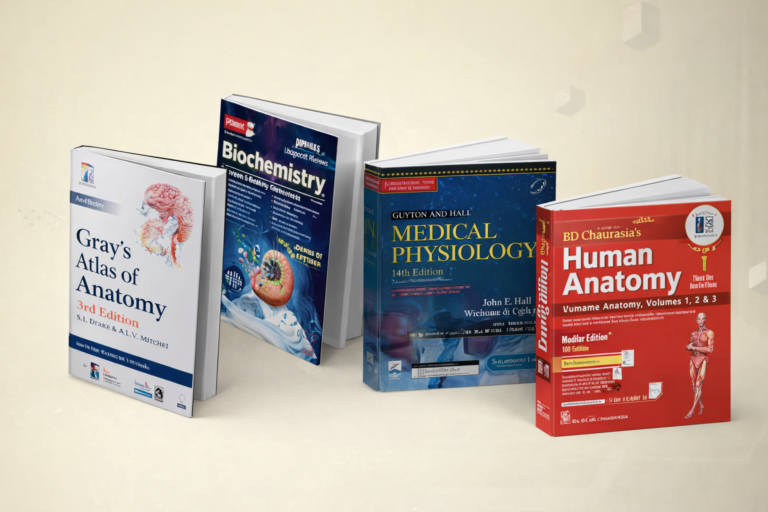
Commonly used resources may include comprehensive textbooks and exam-oriented books. Students often compare options such as Ananthanarayan and Paniker’s Textbook of Microbiology and books by Apurba Sankar Sastry and Sandhya Bhat.
A useful strategy is:
One main textbook + class notes + previous-year questions + a concise revision resource if required.
Avoid collecting too many books. Resource overload can consume time without improving understanding.
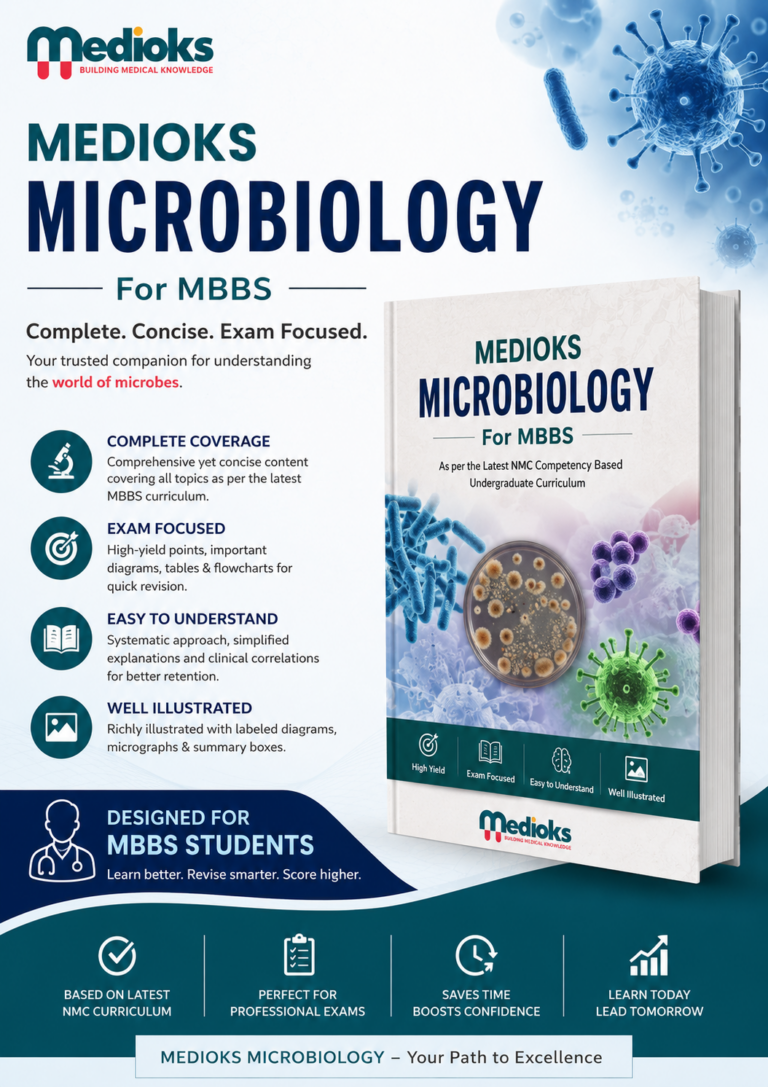
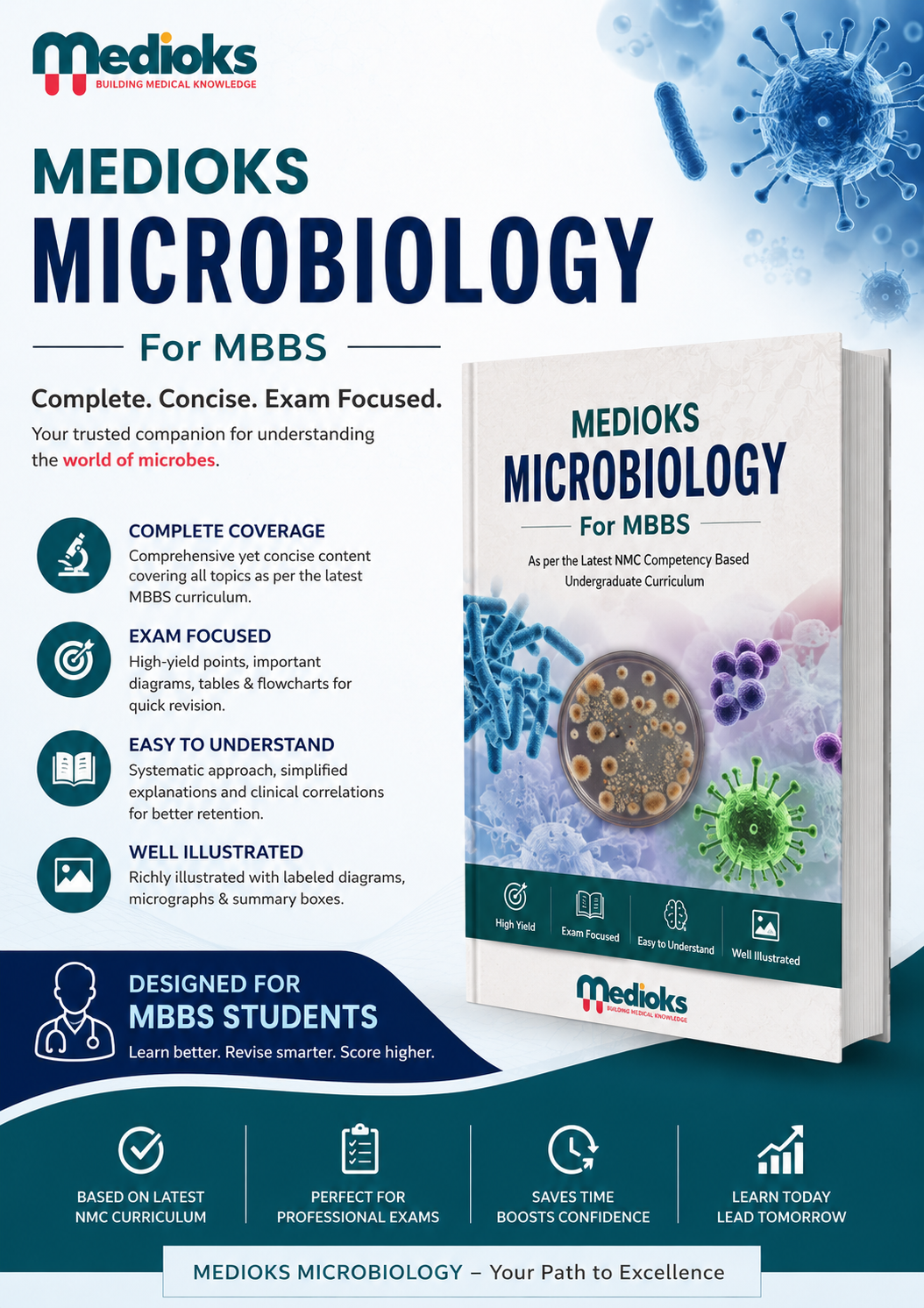
Students looking for authentic MBBS Microbiology books and other medical textbooks can explore the latest editions through Medioks.
A 30-Day Microbiology Revision Strategy
Days 1–5
Revise general microbiology, sterilization, disinfection, and basic diagnostic principles.
Days 6–10
Revise immunology and important immunological tests.
Days 11–20
Study system-wise bacteriology and major infectious diseases.
Days 21–24
Revise virology, mycology, and parasitology according to your syllabus.
Days 25–27
Focus on laboratory diagnosis, diagrams, tables, and practical topics.
Days 28–30
Solve previous-year questions and perform rapid active-recall revision.
Adapt the schedule according to your university syllabus and examination timetable.
Common Mistakes to Avoid
- Memorizing without understanding pathogenesis.
- Reading too many textbooks.
- Ignoring laboratory diagnosis.
- Leaving practical preparation until the end.
- Making excessively long notes.
- Reading passively without self-testing.
- Studying only previous-year questions.
- Skipping regular revision.
A smaller number of resources studied repeatedly is usually more effective than constantly switching between books and notes.
Frequently Asked Questions
How can I memorize Microbiology for MBBS?
Use active recall, spaced repetition, comparison tables, flowcharts, and a fixed framework for each organism. Understanding mechanisms before memorizing details improves retention.
Is Microbiology difficult in MBBS?
The volume of information can be challenging, but a structured system-wise approach makes the subject significantly more manageable.
How many hours should I study Microbiology daily?
There is no universal number. Consistent focused study is more important than long, irregular sessions. During exam preparation, divide your time according to syllabus coverage and weaker areas.
Are previous-year questions enough for Microbiology exams?
No. PYQs are useful for identifying important topics and understanding exam patterns, but they should supplement—not replace—complete syllabus preparation.
Which Microbiology book is best for MBBS students?
The best choice depends on your curriculum and learning style. Use a standard textbook recommended by your faculty and supplement it with concise revision material only when necessary.
Final Thoughts
Learning how to study Microbiology for MBBS exams is mainly about developing the right system. Start with fundamentals, study organisms using a consistent framework, connect them with clinical syndromes, master laboratory diagnosis, and revise through active recall.
Do not aim to read everything repeatedly. Aim to understand, organize, retrieve, and apply what you learn.
A reliable textbook, disciplined revision schedule, previous-year question practice, and regular practical preparation can turn Microbiology from a memory-heavy subject into a logical and clinically relevant part of your MBBS journey.
For students searching for authentic Microbiology books for MBBS, standard medical textbooks, and the latest editions, Medioks can serve as a convenient destination for building a focused medical study library.