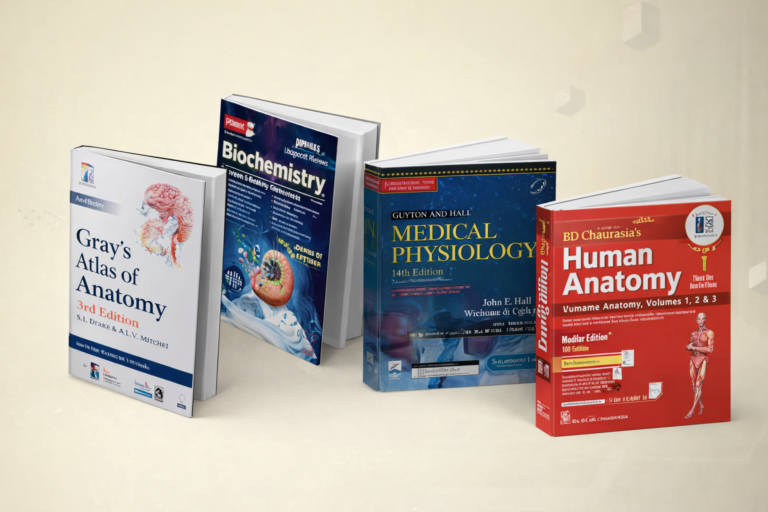
Best MBBS Books Recommended by Medical Toppers (2026 Guide)
Every MBBS student eventually asks the same question: “Which books do medical toppers actually study?” With hundreds of medical textbooks available, choosing the right resources can be overwhelming. While no single book guarantees academic success, high-performing medical students consistently recommend a handful of trusted textbooks that help build strong concepts, prepare for university examinations, and lay the foundation for competitive exams such as NEXT, NEET PG, and INI-CET.
The common misconception is that toppers study from multiple books for every subject. In reality, most successful students focus on one standard textbook, revise it repeatedly, supplement it with practical manuals and question banks, and make concise notes for quick revision.
This comprehensive guide highlights the best MBBS books recommended by medical toppers, explains why these books are widely respected, and provides practical advice on selecting the right resources for every stage of your MBBS journey.
Quick Answer: Which MBBS Books Do Medical Toppers Recommend?
Most medical toppers suggest following this strategy:
- Use one standard textbook for each subject.
- Choose the latest edition aligned with the NMC Competency-Based Medical Education (CBME) curriculum.
- Supplement learning with practical manuals, atlases, and question banks.
- Revise the same book multiple times instead of switching between multiple authors.
- Focus on conceptual clarity rather than memorizing facts.
Consistency and revision matter far more than owning a large collection of books.
Why Standard MBBS Textbooks Matter
Medical education is built on strong foundational concepts. Standard textbooks provide:
- Comprehensive subject coverage.
- Evidence-based explanations.
- Clinical correlations.
- Updated classifications and guidelines.
- Better preparation for clinical practice and postgraduate entrance examinations.
Medical toppers often emphasize mastering one reliable resource rather than reading several books superficially.
Best First-Year MBBS Books
The first year lays the academic foundation for all future clinical learning.
Anatomy
Toppers recommend choosing anatomy books that offer:
- Detailed illustrations.
- Region-wise organization.
- Clinical anatomy sections.
- High-quality diagrams.
- Easy-to-understand explanations.
Many students also pair their textbook with a dedicated anatomy atlas to improve understanding during dissection and practical sessions.
Additional Resources
- Anatomy atlas
- Histology atlas
- Dissection manual
Physiology
A good physiology textbook should explain:
- Normal body functions.
- Organ system integration.
- Clinical applications.
- Flowcharts and diagrams.
Medical toppers often prioritize conceptual learning in physiology because it supports understanding of pathology and pharmacology later in the course.
Biochemistry
Recommended biochemistry resources usually include:
- Simplified metabolic pathways.
- Clinical correlations.
- Molecular biology basics.
- Case-based learning.
- Review questions.
Choosing a clinically oriented textbook makes the subject easier to understand and retain.
Best Second-Year MBBS Books
The second year introduces students to disease mechanisms and therapeutic principles.
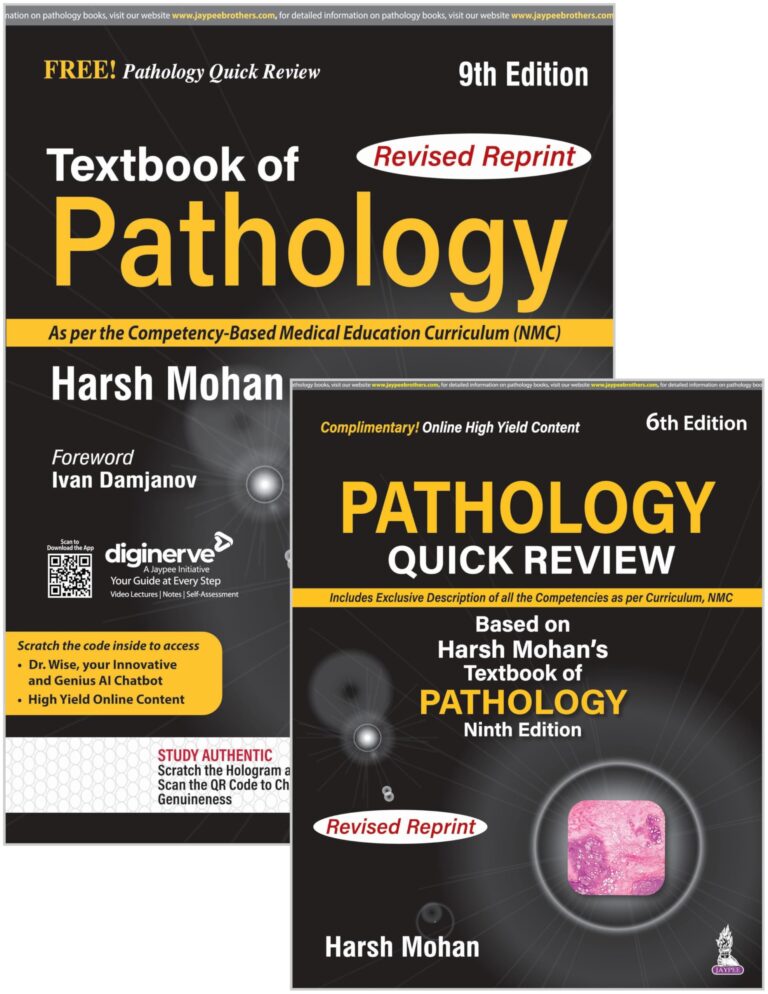
Pathology
Medical toppers often recommend pathology books that balance:
- Basic pathology.
- Systemic pathology.
- Histopathology.
- Clinical relevance.
- Diagnostic principles.
Illustrations, summary tables, and pathology images make learning more effective.
Microbiology
A high-quality microbiology textbook should comprehensively cover:
- Bacteriology.
- Virology.
- Immunology.
- Mycology.
- Parasitology.
- Hospital-acquired infections.
- Antimicrobial resistance.
- Laboratory diagnosis.
Updated information on infectious diseases and infection prevention is particularly important under the current CBME curriculum.
Pharmacology
Strong pharmacology textbooks generally include:
- Drug classifications.
- Mechanisms of action.
- Therapeutic uses.
- Adverse drug reactions.
- Clinical prescribing.
- Recent treatment recommendations.
Medical toppers often recommend preparing personal drug charts to simplify revision.
Forensic Medicine
Look for books that explain:
- Medical jurisprudence.
- Toxicology.
- Ethical principles.
- Medico-legal documentation.
- Clinical case discussions.
Practical viva questions and illustrations improve examination preparation.
Best Third-Year MBBS Books
Third year bridges basic sciences and clinical medicine.
Community Medicine
Recommended textbooks typically include:
- Epidemiology.
- Preventive medicine.
- Biostatistics.
- National health programmes.
- Public health administration.
- Environmental health.
Understanding public health concepts is increasingly important for modern medical practice.
ENT
Medical toppers often prefer books containing:
- Clinical photographs.
- Diagnostic algorithms.
- Examination techniques.
- Common surgical procedures.
- Viva-oriented questions.
Ophthalmology
An ideal ophthalmology textbook should feature:
- Color clinical images.
- Disease classifications.
- Diagnostic techniques.
- Clinical case discussions.
- Practical examination guidance.
Visual learning plays a significant role in mastering ophthalmology.
Best Final-Year MBBS Books
Final-year subjects require deeper clinical understanding and application.
Medicine
Top-performing students recommend textbooks that emphasize:
- Clinical examination.
- Differential diagnosis.
- Disease management.
- Evidence-based treatment.
- Clinical reasoning.
- Case-based discussions.
Medicine forms the backbone of clinical practice and postgraduate preparation.
Surgery
A strong surgery textbook should include:
- Surgical principles.
- Trauma management.
- Operative techniques.
- Surgical anatomy.
- Perioperative care.
- Clinical decision-making.
Illustrated procedures and flowcharts simplify complex concepts.
Obstetrics & Gynaecology
Recommended books cover:
- Antenatal care.
- Labour management.
- Obstetric emergencies.
- Gynecological disorders.
- Family planning.
- Clinical protocols.
Practical management algorithms are especially useful during clinical postings.
Pediatrics
Good pediatric textbooks explain:
- Growth and development.
- Neonatal care.
- Pediatric nutrition.
- Childhood infections.
- Pediatric emergencies.
- Immunization schedules.
Case-based discussions help connect theory with patient care.
How Medical Toppers Actually Study
Owning the right books is only one part of success.
Many medical toppers follow these study habits:
Study One Standard Textbook Thoroughly
Instead of switching between multiple authors, they repeatedly revise one trusted resource.
Make Personalized Notes
Summarizing concepts in your own words improves retention and revision speed.
Use Active Recall
Regular self-testing strengthens long-term memory more effectively than passive reading.
Solve Previous-Year Questions
Understanding university examination patterns improves confidence and performance.
Revise Frequently
Repeated revision is one of the most common habits shared by high-ranking medical students.
Standard Textbooks vs Review Books
Many students wonder whether review books are enough.
Standard Textbooks
Ideal for:
- Building concepts.
- Clinical understanding.
- Long-term preparation.
- NEXT and NEET PG foundation.
Review Books
Useful for:
- Quick revision.
- University examinations.
- MCQ practice.
- Final revision.
Review books should complement—not replace—standard textbooks.
Printed Books vs Digital Learning Resources
Modern medical students often combine traditional textbooks with digital tools.
Printed Books
Advantages:
- Better concentration.
- Easier annotation.
- Improved long-term retention.
- Comfortable extended reading.
Digital Resources
Benefits include:
- Easy portability.
- Search functionality.
- Quick reference.
- Access across devices.
A balanced approach often provides the best learning experience.
Common Mistakes Students Should Avoid
Medical toppers frequently advise against:
- Buying every recommended textbook.
- Ignoring faculty guidance.
- Depending entirely on summary books.
- Purchasing outdated editions.
- Studying without revision.
- Focusing only on memorization instead of understanding.
A disciplined study strategy consistently produces better outcomes than collecting more books.
Tips for Buying MBBS Books
Before purchasing textbooks:
- Verify compatibility with your university syllabus.
- Prefer the latest editions aligned with the NMC CBME curriculum.
- Compare prices across trusted medical bookstores.
- Invest first in core textbooks.
- Use libraries for expensive reference books when possible.
- Add question banks only after completing your standard text.
This approach helps optimize both learning and budget.
Frequently Asked Questions (FAQs)
Which MBBS books do medical toppers recommend?
Medical toppers generally recommend one standard textbook per subject, supported by practical manuals, atlases, and question banks. Consistent revision is considered more important than using multiple books.
Should I buy multiple textbooks for one subject?
For most students, one comprehensive textbook is sufficient. Multiple references are useful only when additional clarification is required.
Are review books enough for MBBS?
Review books are excellent for revision but should not replace standard textbooks, which provide the conceptual foundation required for university examinations and future clinical practice.
Which books are useful for NEXT preparation?
Standard textbooks remain the most reliable resources for building the knowledge base required for NEXT, while question banks and review materials are valuable during later stages of preparation.
How can I choose the right MBBS books?
Select books based on your university syllabus, faculty recommendations, learning style, latest edition, and alignment with the NMC Competency-Based Medical Education (CBME) curriculum.
Conclusion
There is no single “perfect” MBBS textbook, but there are trusted resources that have consistently helped generations of medical students excel academically and clinically. Medical toppers succeed not because they read the most books, but because they choose reliable textbooks, understand concepts deeply, revise consistently, and apply their knowledge through practical learning.
When selecting your study resources, focus on quality over quantity. Invest in standard textbooks that align with the latest NMC CBME curriculum, supplement them with practical manuals and question banks, and create a disciplined revision schedule. By following these principles, you’ll build a strong foundation for university examinations, clinical practice, and future postgraduate entrance exams.