How to Study MBBS in Less Time With Smart Notes: The Ultimate Guide for Medical Students
Introduction
MBBS is one of the most challenging academic journeys in the world. With vast syllabi, clinical responsibilities, practical exams, and constant pressure to retain medical concepts, many students struggle with time management during their medical studies. However, studying longer hours is not always the solution. Smart studying techniques combined with effective note-making strategies can help MBBS students learn faster, revise better, and perform well in exams without burnout.
Today’s successful medical students are shifting from traditional passive learning to smart learning methods that improve retention, understanding, and revision speed. One of the most powerful tools in this approach is the use of smart notes for MBBS preparation.
In this comprehensive guide, we will explore how to study MBBS in less time using smart notes, effective study strategies, revision methods, and digital learning techniques that can improve productivity and academic performance.
Why MBBS Students Struggle With Time Management
Medical education demands continuous learning across multiple subjects including anatomy, physiology, pathology, pharmacology, microbiology, surgery, and medicine. Most students face challenges because:
- The syllabus is extremely vast
- Revision takes too much time
- Traditional note-making becomes lengthy
- Clinical postings reduce study hours
- Lack of proper study planning causes stress
The solution lies in smart study systems rather than simply increasing study hours.
What Are Smart Notes in MBBS?
Smart notes are concise, organized, high-yield study materials designed for quick understanding and faster revision. Instead of rewriting entire textbooks, smart notes focus only on:
- Important concepts
- Frequently asked questions
- Clinical correlations
- Flowcharts
- Mnemonics
- Diagrams
- Tables
- Key revision points
These notes help students revise large topics in a shorter period while improving memory retention.
Benefits of Using Smart Notes for MBBS
1. Faster Revision
Smart notes reduce unnecessary reading and help students revise high-yield concepts quickly before exams.
2.Better Concept Retention
Visual learning tools like flowcharts, diagrams, and color-coded notes improve long-term memory.
3. Saves Study Time
Students can cover more topics in less time using concise medical notes.
4. Helps During Clinical Posting
Portable digital notes allow students to revise anytime during hospital duties and internships.
Related Search Terms
- MBBS eNotes
- Digital medical notes
- Portable medical study material
How to Create Smart Notes for MBBS
Creating effective smart notes requires strategy and consistency.
Step 1: Read Standard Textbooks First
Before making notes, understand the topic from trusted MBBS textbooks.
Examples:
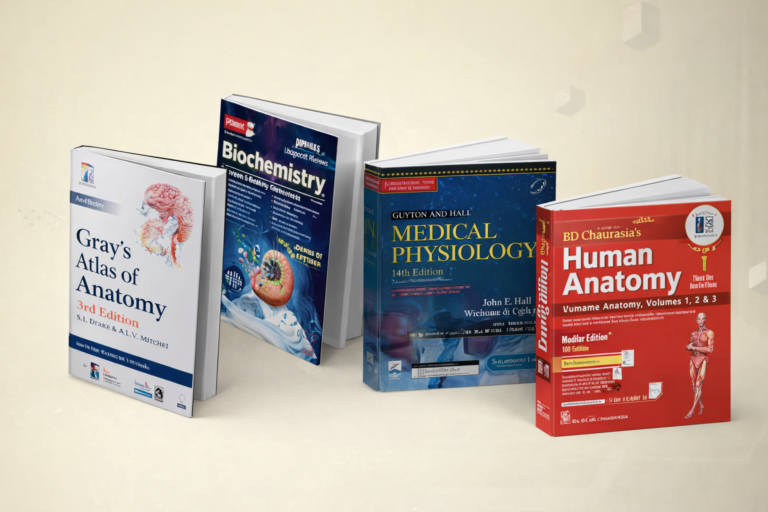
- Gray’s Anatomy
- Guyton Physiology
- Robbins Pathology
- KD Tripathi Pharmacology
Conceptual clarity is essential before summarizing information.
Step 2: Use the 80/20 Rule
Focus on the 20% of topics that are repeatedly asked in:
- University exams
- NEET PG
- INI CET
- Viva examinations
This strategy saves time and improves productivity.
Step 3: Convert Long Text Into Flowcharts
Flowcharts simplify complicated medical concepts and make revision easier.
Example:
Disease Mechanism → Symptoms → Diagnosis → Treatment
This approach works especially well for:
- Pathology
- Pharmacology
- Microbiology
- Medicine
Step 4: Use Color Coding
Different colors help categorize information:
- Red → Important points
- Blue → Definitions
- Green → Clinical correlations
- Yellow → Mnemonics
Visual memory significantly improves retention.
Step 5: Include Mnemonics
Mnemonics help memorize difficult lists, drugs, bacteria, and pathways quickly.
Example:
For cranial nerves:
“Oh Oh Oh To Touch And Feel Very Good Velvet, AH!”
Mnemonics save time during revision and exam recall.
Best Smart Study Techniques for MBBS Students
1. Active Recall Method
Instead of repeatedly reading textbooks, test yourself actively.
Ask questions like:
- What are the causes?
- What is the mechanism?
- What are the complications?
Active recall improves long-term retention better than passive reading.
2. Spaced Repetition
Spaced repetition means revising topics at increasing intervals.
Example:
- Day 1
- Day 3
- Day 7
- Day 15
- Day 30
This method scientifically improves memory retention.
3. Pomodoro Study Technique
Study for:
- 45 minutes focused
- 10-minute break
This reduces mental fatigue and improves concentration.
4. Use Digital Notes and Apps
Modern medical students increasingly use:
- Notion
- OneNote
- GoodNotes
- Anki flashcards
These tools help organize MBBS notes efficiently.
Subject-Wise Smart Note Strategies
Anatomy
Use:
- Diagrams
- Labeling
- Tables
- Mnemonics
Avoid excessive paragraph writing.
Physiology
Focus on:
- Flowcharts
- Mechanisms
- Graphs
- Concept maps
Pharmacology
Create:
- Drug classification charts
- Side effect tables
- Mnemonics
Pharmacology becomes easier through repeated revision.
Pathology
Use:
- Disease comparison tables
- Histopathology images
- Clinical correlations
Medicine and Surgery
Prepare:
- Case summaries
- Management protocols
- Differential diagnosis charts
Clinical subjects require concept integration.
How Smart Notes Help in NEET PG Preparation
MBBS smart notes become extremely valuable during competitive exam preparation.
They help students:
- Revise faster
- Practice MCQs efficiently
- Focus on high-yield topics
- Improve recall speed
Many NEET PG toppers rely heavily on concise self-made notes during final revision.
Common Mistakes MBBS Students Should Avoid
1. Making Over-Detailed Notes
Writing entire textbooks again wastes time.
2. Using Too Many Resources
Stick to limited standard books and revise repeatedly.
3. Ignoring Revision
Without revision, information retention decreases rapidly.
4. Passive Reading
Reading without active recall lowers memory retention.
5. Lack of Consistency
Small daily study sessions are more effective than irregular long hours.
Best Resources for MBBS Smart Notes
Students can combine:
- Standard textbooks
- Review books
- Digital flashcards
- Medical eBooks
- Online lecture notes
Reliable resources improve both conceptual understanding and exam preparation.
Future of Smart Learning in MBBS
Medical education is rapidly evolving toward digital and AI-assisted learning systems. Smart notes are now being integrated with:
- AI-generated flashcards
- Interactive diagrams
- Video explanations
- Clinical simulations
- Personalized revision systems
Students who adopt smart learning strategies early often perform better academically while maintaining healthier study-life balance.
Conclusion
Studying MBBS in less time is not about shortcuts — it’s about studying smarter. Smart notes help medical students simplify complex concepts, revise faster, retain information longer, and reduce academic stress.
By combining concise note-making, active recall, spaced repetition, and digital learning tools, MBBS students can dramatically improve their productivity and exam performance without studying endlessly.
Whether you are preparing for university exams, clinical postings, or NEET PG, smart notes can become your most powerful academic weapon.
Remember: consistency, revision, and conceptual clarity matter far more than studying for excessively long hours.
Frequently Asked Questions (FAQs)
Are smart notes enough for MBBS preparation?
Smart notes are excellent for revision, but they should be built after understanding standard textbooks.
Which app is best for MBBS notes?
Popular options include Notion, OneNote, GoodNotes, and Anki.
How many hours should MBBS students study daily?
Focused and consistent study is more important than extremely long hours.
Are digital notes better than handwritten notes?
Both methods work well. Many students combine handwritten understanding with digital revision tools.