One Book for Every MBBS Subject: Expert Recommendations (2026 Guide)
Choosing the right MBBS textbooks can be overwhelming. Every senior has a different opinion, every professor has a preferred reference, and social media often recommends multiple books for the same subject. As a result, many medical students end up buying more books than they can realistically study.
The truth is that you do not need five books for every MBBS subject. Most students perform well by mastering one reliable core textbook, supported by class notes, practical sessions, and regular revision.
Quick Answer: For most MBBS students, the best strategy is to choose one standard textbook for each subject that aligns with the university curriculum, builds strong concepts, and remains useful for clinical learning. Additional reference books should only be used when deeper understanding is required.
This guide provides expert recommendations for one trusted textbook in every major MBBS subject and explains why these books continue to be preferred by students and educators.
Why Choosing One Core Book Works
Medical education is concept-heavy. Jumping between multiple books often creates confusion instead of clarity.
Faculty members generally recommend focusing on one primary textbook because it helps students:
- Build concepts systematically
- Follow the prescribed syllabus
- Revise efficiently
- Reduce unnecessary expenses
- Maintain consistency throughout the academic year
The goal is not to own the largest medical library—it is to understand and retain what you study.
First-Year MBBS Books
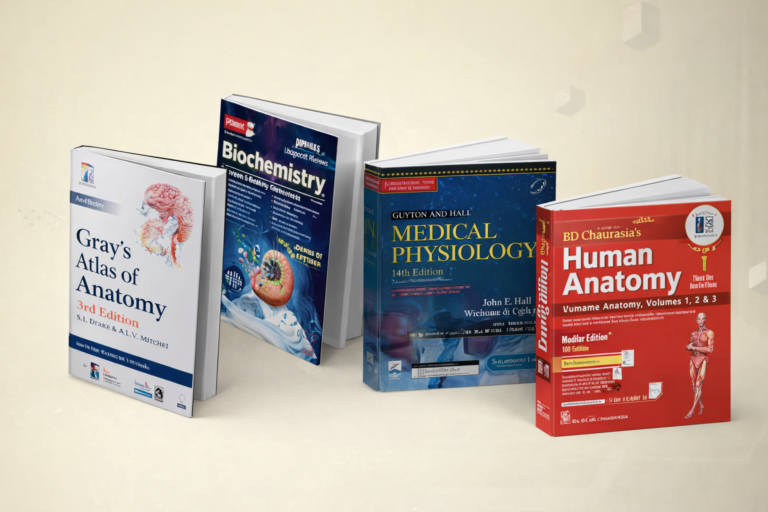
Anatomy – BD Chaurasia’s Human Anatomy
For undergraduate MBBS students in India, BD Chaurasia’s Human Anatomy remains one of the most widely recommended textbooks.
Why Experts Recommend It
- Easy-to-understand language
- Well-organized regional anatomy
- Clinical correlations
- Examination-oriented presentation
- Useful illustrations
Students often complement it with an anatomy atlas for better three-dimensional understanding.
Physiology – Guyton and Hall Textbook of Medical Physiology
Guyton and Hall is internationally respected for explaining physiological mechanisms in a logical and conceptual manner.
Best For
- Building strong concepts
- Understanding body systems
- Clinical integration
- Long-term medical learning
Students who understand physiology well generally find Pathology and Medicine easier later in MBBS.
Biochemistry – Vasudevan’s Textbook of Biochemistry
Many Indian medical colleges recommend Vasudevan because it balances conceptual explanations with university examination requirements.
Strengths include:
- Metabolism explained clearly
- Clinical applications
- Simple language
- Organized presentation
Second-Year MBBS Books
Pathology – Robbins Basic Pathology
Few pathology books have influenced medical education as much as Robbins Basic Pathology.
Experts recommend Robbins because it explains:
- Disease mechanisms
- Cellular pathology
- Inflammation
- Neoplasia
- Organ-system pathology
- Clinicopathological correlations
Rather than memorizing diseases, students learn why diseases occur.
Pharmacology – K.D. Tripathi
K.D. Tripathi’s Essentials of Medical Pharmacology remains one of the most recommended pharmacology books in India.
Faculty appreciate it for:
- Drug classifications
- Mechanisms of action
- Clinical relevance
- Adverse effects
- Rational prescribing concepts
Students preparing for university exams and competitive medical examinations frequently use this book.
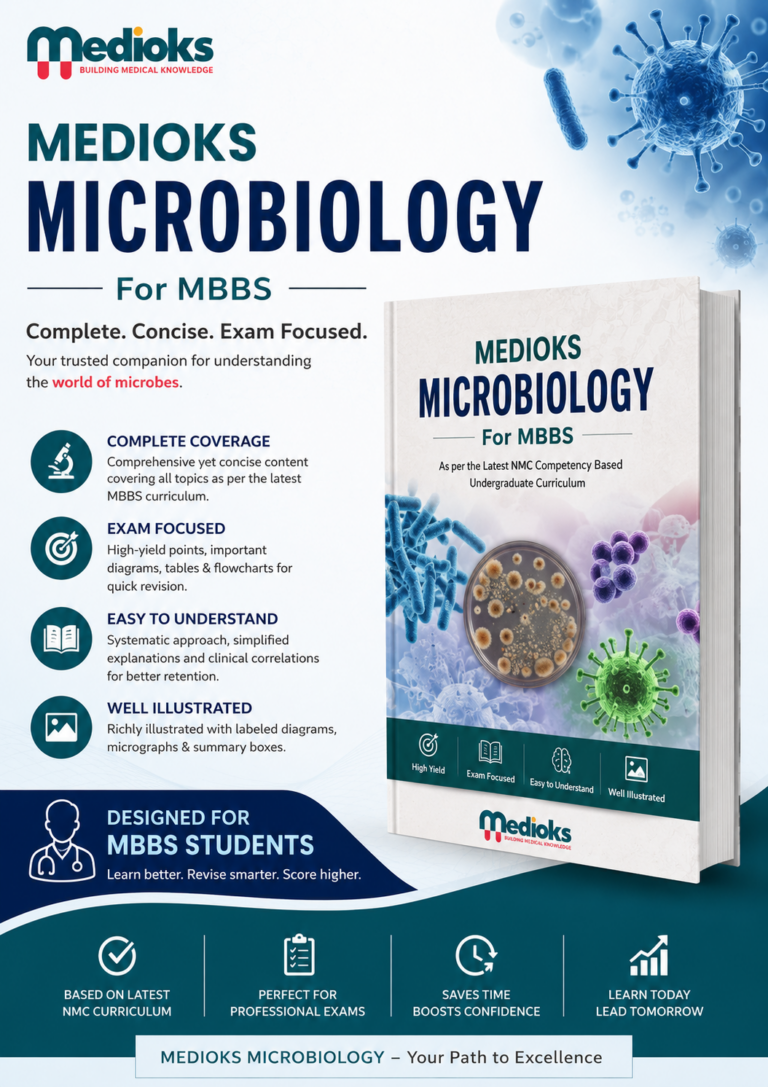
Microbiology – Ananthanarayan and Paniker’s Textbook of Microbiology
Paniker Microbiology continues to be one of the most trusted microbiology textbooks for MBBS students.
Why It Is Recommended
- Comprehensive coverage
- Clinical microbiology focus
- Immunology integration
- Updated infectious disease concepts
- Strong university relevance
Students who prefer a more concise presentation may also explore Apurba Sankar Sastry, but Paniker remains a standard reference in many institutions.
Third-Year MBBS Books
Community Medicine – Park’s Textbook of Preventive and Social Medicine
Community Medicine is best learned through a combination of theory and public health application.
Park’s Textbook of Preventive and Social Medicine is widely recommended because it covers:
- Epidemiology
- National health programmes
- Biostatistics
- Environmental health
- Preventive medicine
- Public health policies
It remains one of the most frequently recommended books by Community Medicine faculty.
Ophthalmology – Khurana’s Comprehensive Ophthalmology
Khurana is a preferred undergraduate resource because it explains ophthalmic diseases in a clear and structured manner.
Students appreciate:
- Colour illustrations
- Clinical photographs
- Examination-oriented content
- Easy readability
ENT – Dhingra’s Diseases of Ear, Nose and Throat
Dhingra has long been recommended for undergraduate ENT education.
Key strengths include:
- Simple explanations
- Clinical relevance
- Practical examination guidance
- Well-illustrated diagrams
Final-Year MBBS Books
General Medicine – Davidson’s Principles and Practice of Medicine
Among standard medical textbooks, Davidson remains one of the most respected choices for undergraduate students.
It provides:
- Comprehensive clinical medicine
- Evidence-based explanations
- Diagnostic reasoning
- Modern treatment principles
- Systematic presentation
Medicine becomes easier when students focus on understanding disease processes rather than memorizing isolated facts.
Surgery – Bailey & Love’s Short Practice of Surgery
Bailey & Love has been a trusted surgical textbook for decades.
Experts recommend it because it covers:
- Surgical principles
- Trauma
- Gastrointestinal surgery
- Breast surgery
- Vascular surgery
- Oncology
- Clinical decision-making
The book combines conceptual understanding with practical surgical knowledge.
Obstetrics and Gynecology – D.C. Dutta’s Textbook of Obstetrics and Gynecology
For undergraduate students, D.C. Dutta is widely recommended due to its balanced approach.
Topics include:
- Pregnancy
- Labour
- High-risk obstetrics
- Gynecological disorders
- Reproductive health
- Clinical management
Its structured presentation makes it useful for both examinations and clinical postings.
Pediatrics – Ghai Essential Pediatrics
Ghai Essential Pediatrics remains one of the most commonly recommended pediatric textbooks.
Faculty value it for:
- Growth and development
- Pediatric diseases
- Immunization
- Nutrition
- Neonatology
- Child health
The book emphasizes practical pediatric care alongside theoretical knowledge.
Clinical Examination Book
Hutchison’s Clinical Methods
Learning medicine is not limited to reading diseases—you must also learn how to examine patients.
Hutchison’s Clinical Methods teaches:
- History taking
- Physical examination
- Communication skills
- Clinical reasoning
- Bedside diagnosis
Many faculty members recommend reading it alongside clinical postings rather than waiting until final examinations.
Should You Buy Multiple Books for Every Subject?
In most cases, no.
A practical learning strategy is:
One Core Textbook + Class Notes + Practical Sessions + Previous-Year Questions + Revision
Buying several books often leads to incomplete reading and reduced revision time.
How Experts Recommend Studying MBBS Textbooks
Rather than reading chapters repeatedly, use this five-step framework:
Step 1: Preview
Read learning objectives and chapter headings.
Step 2: Understand
Focus on concepts instead of memorizing sentences.
Step 3: Make Notes
Write concise summaries, flowcharts, and diagrams.
Step 4: Apply
Relate the topic to clinical scenarios and patient care.
Step 5: Revise
Review the material at regular intervals to improve long-term retention.
Where to Buy MBBS Books Online
Students can purchase authentic MBBS textbooks from recognized academic bookstores, publisher websites, and trusted online medical book platforms.
Platforms such as Medioks provide access to:
- First-year MBBS books
- Second-year MBBS books
- Final-year MBBS books
- Subject-wise medical textbooks
- Competitive exam resources
- Latest medical book editions
Before purchasing, always verify:
Title → Author → Edition → Publisher → ISBN → Curriculum Compatibility
Frequently Asked Questions
Can one book be enough for every MBBS subject?
For most undergraduate students, one reliable textbook per subject—supported by lectures, practical training, and revision—is generally sufficient.
Which MBBS book is best for Anatomy?
BD Chaurasia is widely recommended for undergraduate Anatomy, often alongside an anatomy atlas for visual learning.
Which microbiology book is most recommended?
Ananthanarayan and Paniker’s Textbook of Microbiology remains one of the most trusted choices in many Indian medical colleges.
Should I buy the latest editions?
Recent editions are generally recommended, particularly for subjects where clinical guidelines, classifications, or treatment approaches change over time.
Is it necessary to follow topper recommendations?
Topper recommendations can provide useful guidance, but students should ultimately choose books that match their curriculum, learning style, and academic goals.
Final Thoughts
The best MBBS students are not the ones who own the most textbooks—they are the ones who master the right textbooks.
By selecting one trusted book for every MBBS subject, you create a structured and sustainable study system that supports conceptual learning, clinical understanding, and effective revision.
Focus on quality rather than quantity. Combine a reliable textbook with regular lectures, practical exposure, previous-year question practice, and spaced revision. This balanced approach not only improves examination performance but also lays a stronger foundation for internship, postgraduate entrance preparation, and lifelong medical practice.