Subject-Wise GNM Nursing Books: Complete Guide for Nursing Students
Choosing the right GNM nursing books can significantly improve how students understand theory, prepare for examinations, and connect classroom learning with supervised clinical practice. The challenge is that GNM students often encounter long book lists containing textbooks, guides, question banks, and reference materials.
So, which books do you actually need?
Quick answer: The best subject-wise GNM nursing books are curriculum-aligned resources covering core areas such as Anatomy and Physiology, Fundamentals of Nursing, Community Health Nursing, Medical-Surgical Nursing, Mental Health Nursing, Child Health Nursing, Midwifery, and Gynaecological Nursing. The exact subjects and their year-wise distribution can vary according to the curriculum followed by an institution, so students should verify their current official syllabus before purchasing books.
The most effective strategy is usually:
One reliable core textbook per major subject + Class notes + Clinical learning + Question practice
Why Choose GNM Books Subject-Wise?
Buying a random “complete GNM book set” may appear convenient, but every student has different academic needs.
A subject-wise approach allows you to:
- Select books aligned with your syllabus
- Avoid unnecessary duplicate resources
- Choose different authors based on subject strengths
- Control your textbook budget
- Build a focused nursing library
Instead of asking, “How many books should I buy?” ask:
“Which resource will I actually use for this subject?”
1. Anatomy and Physiology Books for GNM Nursing
Anatomy and Physiology provide the scientific foundation for nursing education.
Students typically study:
- Cells and tissues
- Skeletal system
- Muscular system
- Cardiovascular system
- Respiratory system
- Digestive system
- Nervous system
- Endocrine system
- Reproductive system
A good book should include clear diagrams, simple explanations, labelled structures, and clinical relevance.
Best Study Approach
Use the sequence:
Structure → Function → Clinical Relevance
For example, do not memorize the structure of the heart without understanding blood flow and its relevance to patient assessment.
2. Fundamentals of Nursing Books
Fundamentals of Nursing is one of the most important subjects for building professional nursing skills.
A useful textbook should cover areas such as:
- Basic nursing principles
- Patient safety
- Hygiene and comfort
- Vital signs
- Infection prevention
- Medication-related fundamentals
- Documentation
- Communication
- Basic nursing procedures
Students should select a book that explains not only how a procedure is performed but also the rationale behind important steps.
Important: Textbooks support learning but do not replace supervised skills training or institutional clinical protocols.
3. Community Health Nursing Books
Community Health Nursing focuses on healthcare beyond the hospital environment.
Important areas may include:
- Primary healthcare
- Family health
- Community assessment
- Health education
- Epidemiological concepts
- Maternal and child health
- Environmental health
- Role of community health nurses
Because public-health programmes and guidelines can change, students should supplement textbooks with current authoritative information when required.
Best Way to Study
Follow:
Health Problem → Population → Prevention → Programme → Nursing Role
This creates stronger conceptual connections than memorizing isolated facts.
4. Medical-Surgical Nursing Books
Medical-Surgical Nursing is often one of the broadest areas in nursing education.
A strong textbook should help students understand:
- Disease processes
- Clinical manifestations
- Diagnostic evaluation
- Treatment principles
- Nursing assessment
- Nursing interventions
- Patient education
Use this study framework:
Definition → Causes → Pathophysiology → Signs and Symptoms → Investigation → Management → Nursing Care
This structure is particularly useful for both examinations and clinical learning.
5. Mental Health Nursing Books
Mental Health Nursing requires both theoretical understanding and sensitive, patient-centred communication.
Books may cover:
- Mental health concepts
- Therapeutic communication
- Psychiatric assessment
- Common mental health conditions
- Treatment approaches
- Nursing interventions
- Rehabilitation
Choose resources that explain concepts clearly and use respectful, current terminology.
Students should connect textbook knowledge with supervised clinical instruction and professional standards.
6. Child Health Nursing Books
Child Health Nursing focuses on the health needs of infants, children, and adolescents.
Important topics may include:
- Growth and development
- Nutrition
- Newborn care
- Common childhood conditions
- Paediatric nursing procedures
- Preventive healthcare
- Family-centred care
A good book should contain:
- Growth charts or developmental concepts
- Age-specific nursing considerations
- Clear tables
- Clinical examples
- Structured nursing care
Paediatric care differs from adult care, making age-specific understanding essential.
7. Midwifery Books for GNM Students
Midwifery is a clinically important area of nursing education.
Students may study:
- Pregnancy
- Antenatal care
- Labour
- Postnatal care
- Newborn care
- High-risk pregnancy
- Obstetric complications
- Nursing responsibilities
Choose a textbook with clear diagrams, structured clinical explanations, and nursing-focused content.
A useful study pattern is:
Normal Process → Assessment → Complication → Management Principle → Nursing Responsibility
8. Gynaecological Nursing Books
Gynaecological Nursing focuses on conditions affecting the female reproductive system and related nursing care.
Students may learn about:
- Menstrual disorders
- Reproductive health
- Common gynaecological conditions
- Diagnostic procedures
- Surgical care
- Patient education
The best resources connect disease knowledge with practical nursing responsibilities.
9. Nursing Education and Professional Development Books
Depending on the curriculum, students may also study topics related to:
- Teaching and learning
- Health education
- Communication
- Leadership
- Nursing management
- Professional ethics
- Legal responsibilities
These subjects help students transition from learners to responsible healthcare professionals.
Look for books that use case examples, practical situations, and structured explanations rather than definitions alone.
10. GNM Question Banks and Exam Preparation Books
Question banks can be valuable, but they should support—not replace—textbook learning.
A useful GNM question bank may contain:
- Previous-year questions
- Long-answer questions
- Short notes
- Objective questions
- Practice exercises
The ideal sequence is:
Learn → Understand → Recall → Practise → Revise
Reading model answers without understanding the underlying concepts may create weak long-term retention.
How to Choose the Best Subject-Wise GNM Nursing Books
Before buying any GNM textbook, evaluate five factors:
Curriculum Alignment
Does the book match the syllabus followed by your institution?
Edition
Is the edition suitable and reasonably current?
Clarity
Can you understand the author’s explanation style?
Nursing Relevance
Does the book clearly explain nursing assessment, intervention, and patient care?
Usability
Will you realistically read and revise the book?
The most expensive or detailed textbook is not automatically the best choice.
Should You Buy a Complete GNM Book Set?
A complete set may be convenient if every included book matches your syllabus and learning needs.
However, subject-wise purchasing can provide greater flexibility.
A practical approach is:
Buy essential core books first → Use the library for references → Purchase additional books only when genuinely needed
This can reduce both cost and information overload.
Where to Buy GNM Nursing Books Online
Students can explore specialist nursing and medical bookstores, academic booksellers, and established online platforms.
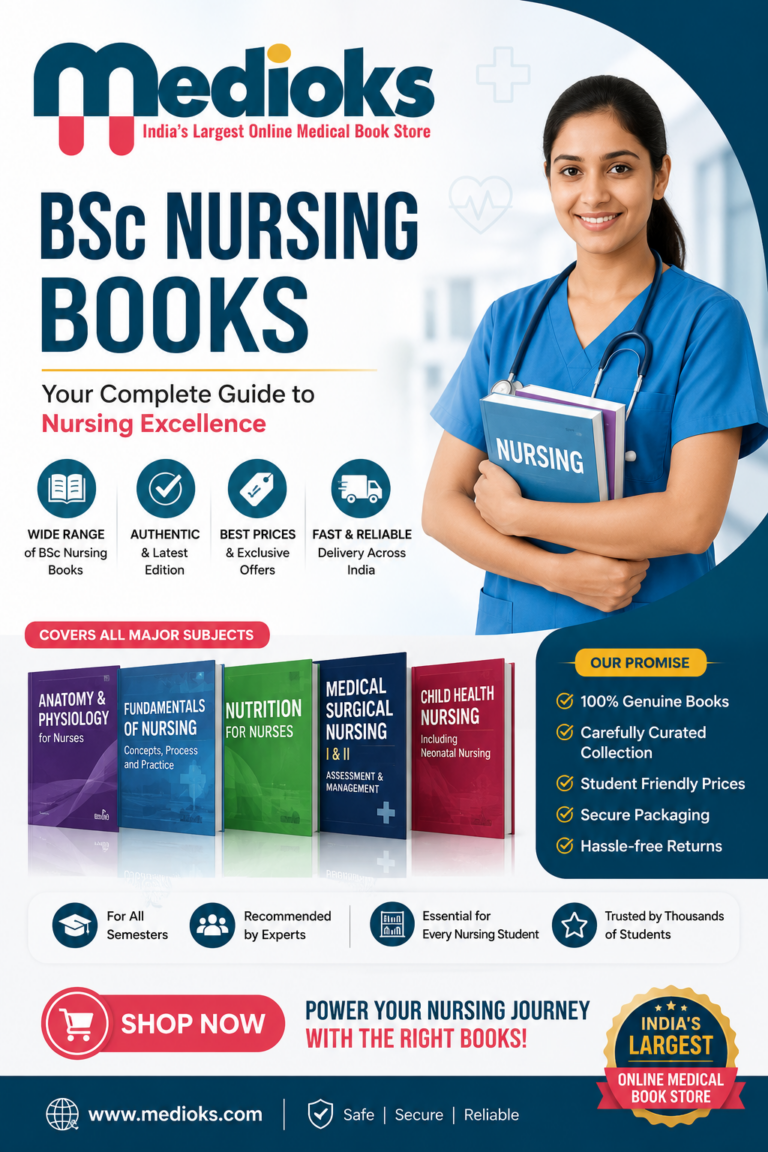
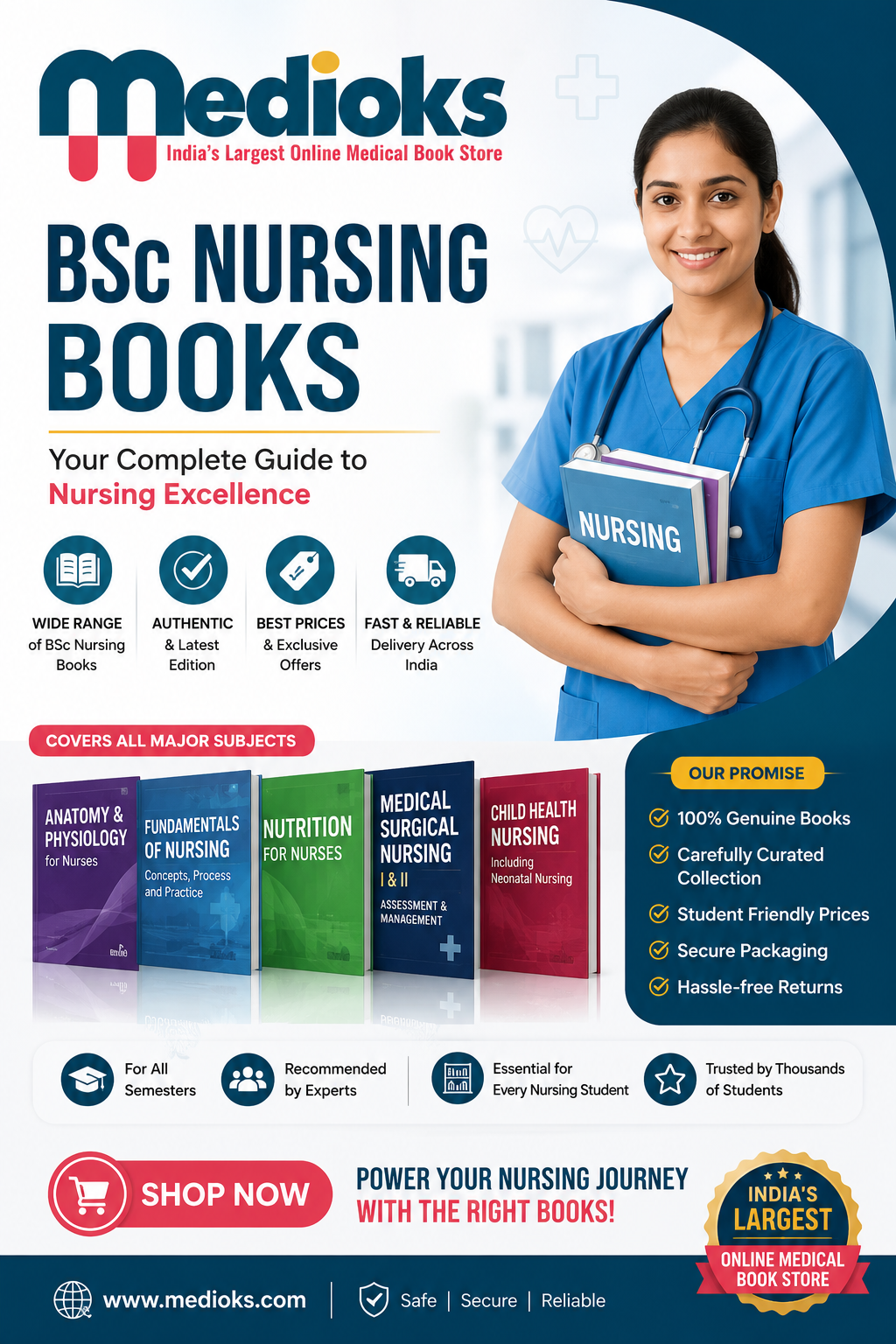
Medical-book platforms such as Medioks can be explored when searching for:
- GNM nursing books
- GNM first-year books
- GNM second-year books
- GNM third-year books
- Nursing entrance books
- Nursing question banks
Before ordering, verify:
Title → Author → Edition → Publisher → Subject → Curriculum relevance
Frequently Asked Questions
What are the main subjects in GNM Nursing?
Common study areas include Anatomy and Physiology, Fundamentals of Nursing, Community Health Nursing, Medical-Surgical Nursing, Mental Health Nursing, Child Health Nursing, and Midwifery. The exact structure may vary by curriculum.
Which books are best for GNM students?
The best books are those aligned with your current syllabus, written clearly, clinically relevant, and suitable for repeated revision.
How many books should a GNM student buy?
Most students benefit from one reliable core textbook for each major subject, supplemented by class notes, clinical learning, and selective exam-practice resources.
Are GNM question banks enough for exams?
No. Question banks are most effective when used after studying concepts from textbooks and class materials.
Can I buy GNM nursing books online?
Yes. Students can purchase nursing books from specialist medical bookstores, academic sellers, and established online platforms. Always verify the edition and complete book details before ordering.
Final Thoughts
Choosing the right subject-wise GNM nursing books is about building a focused learning system—not collecting the largest number of textbooks.
Use this framework:
Choose by subject → Verify the syllabus → Select one core resource → Study conceptually → Apply clinically → Revise actively
The best GNM book is the one that helps you understand patient care, prepare effectively for examinations, and develop stronger professional nursing knowledge.
A carefully selected subject-wise book collection can support your journey from classroom learning to confident, responsible clinical practice.