Complete Guide to MBBS Microbiology Subject (2026): Syllabus, Best Books, Study Tips & Exam Strategy
Microbiology is one of the most important subjects in the second year of MBBS. It forms the bridge between basic medical sciences and clinical medicine by teaching students how microorganisms cause disease, how infections spread, and how laboratory investigations guide diagnosis and treatment.
Although many students initially consider microbiology to be a memory-based subject, it is actually a highly conceptual discipline. A clear understanding of microbiology helps future doctors diagnose infectious diseases, interpret laboratory reports, prescribe antibiotics responsibly, and practice effective infection control.
This comprehensive guide explains everything MBBS students need to know about the microbiology subject, including the latest NMC competency-based curriculum, recommended textbooks, study strategies, practical examination preparation, and frequently asked questions.
Quick Answer
What Is MBBS Microbiology?
MBBS Microbiology is the study of disease-causing microorganisms, including bacteria, viruses, fungi, and parasites. It also covers immunology, laboratory diagnosis, sterilization, infection control, antimicrobial therapy, and public health. It is a core second-year MBBS subject and plays a major role in university exams, NEXT, and NEET PG.
Why Is Microbiology Important in MBBS?
Microbiology is essential because it helps students understand:
- Infectious diseases
- Host immune response
- Laboratory diagnosis
- Antibiotic selection
- Vaccine principles
- Hospital infection control
- Emerging infectious diseases
Almost every clinical branch—including Medicine, Surgery, Pediatrics, Obstetrics & Gynecology, Community Medicine, and Dermatology—relies on microbiological knowledge for patient care.
MBBS Microbiology Syllabus (According to the NMC CBME Curriculum)
The competency-based MBBS curriculum divides microbiology into several major sections.
1. General Microbiology
Students learn the fundamentals of microorganisms, including:
- Classification of microorganisms
- Bacterial structure
- Growth and nutrition
- Sterilization and disinfection
- Culture media
- Bacterial genetics
This section lays the foundation for understanding all subsequent topics.
2. Immunology
Immunology focuses on the body’s defense mechanisms.
Key topics include:
- Innate immunity
- Adaptive immunity
- Antigens and antibodies
- Complement system
- Hypersensitivity
- Vaccines
- Autoimmune disorders
- Immunodeficiency
Understanding immunology is essential for learning infectious diseases and vaccination strategies.
3. Bacteriology
This is the largest portion of the syllabus.
Students study medically important bacteria such as:
- Staphylococcus
- Streptococcus
- Neisseria
- Corynebacterium
- Clostridium
- Salmonella
- Shigella
- Vibrio
- Escherichia coli
- Mycobacterium tuberculosis
For each organism, students learn:
- Morphology
- Transmission
- Pathogenesis
- Clinical features
- Laboratory diagnosis
- Treatment
- Prevention
4. Virology
Virology covers viral diseases of clinical importance, including:
- Hepatitis viruses
- HIV
- Influenza
- Rabies
- Dengue
- Coronavirus
- Herpes viruses
- Human papillomavirus (HPV)
Students learn viral replication, diagnosis, vaccines, and prevention.
5. Mycology
Important fungal pathogens include:
- Candida
- Aspergillus
- Cryptococcus
- Dermatophytes
- Mucor
Topics focus on clinical features, diagnosis, and antifungal therapy.
6. Parasitology
Students study protozoa and helminths such as:
- Plasmodium
- Entamoeba histolytica
- Giardia
- Leishmania
- Wuchereria bancrofti
- Taenia
- Ascaris
Life cycles, transmission, laboratory diagnosis, and treatment are emphasized.
7. Applied Microbiology
This section includes:
- Biomedical waste management
- Hospital infection control
- Healthcare-associated infections
- Specimen collection
- Antimicrobial stewardship
- Public health microbiology
These topics are highly relevant for both examinations and clinical practice.
Best Microbiology Books for MBBS Students
Selecting the right textbook is essential for understanding concepts and performing well in exams.
Essentials of Medical Microbiology – Apurba Sankar Sastry
This is one of the most recommended undergraduate textbooks because it offers:
- Simple language
- Clinical case discussions
- Flowcharts
- High-quality illustrations
- NMC CBME alignment
Ideal for university examinations.
Ananthanarayan and Paniker’s Textbook of Microbiology
Best suited for:
- In-depth conceptual understanding
- Detailed explanations
- Advanced learning
- NEET PG preparation
C. P. Baveja’s Textbook of Microbiology
A useful option for students seeking:
- Concise explanations
- Quick revision
- Budget-friendly learning
Practical Microbiology Manual
An essential companion for:
- Gram staining
- Acid-fast staining
- Culture media
- Laboratory instruments
- Practical examinations
- Viva preparation
Practical Skills Every MBBS Student Should Learn
Microbiology practicals are an important part of the curriculum.
Students should become familiar with:
- Gram staining
- Acid-fast staining
- Culture media identification
- Sterilization methods
- Biomedical waste segregation
- Specimen collection
- Laboratory safety protocols
These skills are assessed during practical exams and clinical postings.
How to Study MBBS Microbiology Effectively
Many students struggle because they rely on memorization.
A better strategy includes:
- Study General Microbiology first.
- Complete Immunology before organism-specific chapters.
- Learn microorganisms using a fixed pattern:
- Morphology
- Transmission
- Pathogenesis
- Clinical features
- Diagnosis
- Treatment
- Prevention
- Create comparison tables and flowcharts.
- Revise diagrams regularly.
- Solve previous university question papers.
- Connect theory with real clinical cases.
Conceptual learning improves both retention and clinical reasoning.
Common Mistakes Students Should Avoid
Avoid these common errors:
- Reading multiple textbooks simultaneously.
- Ignoring practical laboratory sessions.
- Memorizing facts without understanding concepts.
- Skipping immunology.
- Delaying revision until the last week.
- Depending only on previous-year question papers.
Consistent study with one standard textbook is usually sufficient.
Importance of Microbiology for NEXT and NEET PG
Microbiology is a high-yield subject for postgraduate entrance examinations.
Important areas include:
- Infectious diseases
- Immunology
- Antimicrobial resistance
- Laboratory diagnosis
- Vaccination
- Hospital infection control
Strong undergraduate concepts significantly reduce preparation time for NEXT and NEET PG.
Frequently Asked Questions
Is microbiology difficult in MBBS?
Microbiology is extensive but not difficult when studied conceptually. Understanding disease mechanisms and laboratory diagnosis makes learning easier than memorization.
Which microbiology book is best for MBBS?
Essentials of Medical Microbiology by Apurba Sankar Sastry is widely recommended for undergraduate students. Ananthanarayan and Paniker is preferred for advanced reading and NEET PG preparation.
How should I prepare for microbiology university exams?
Study one standard textbook thoroughly, revise regularly, attend practical sessions, and practice previous-year university questions.
Is microbiology important for clinical practice?
Yes. Every doctor needs microbiology to diagnose infections, interpret laboratory reports, prescribe antibiotics responsibly, and prevent disease transmission.
How much time is needed to complete MBBS microbiology?
Most students can complete the syllabus within 4–6 weeks through consistent daily study and regular revision.
Conclusion
Microbiology is much more than a second-year MBBS subject—it is the scientific foundation of infectious disease diagnosis, laboratory medicine, immunology, and infection control. A strong understanding of microbiology prepares students not only for university examinations but also for internships, NEXT, NEET PG, and future clinical practice.
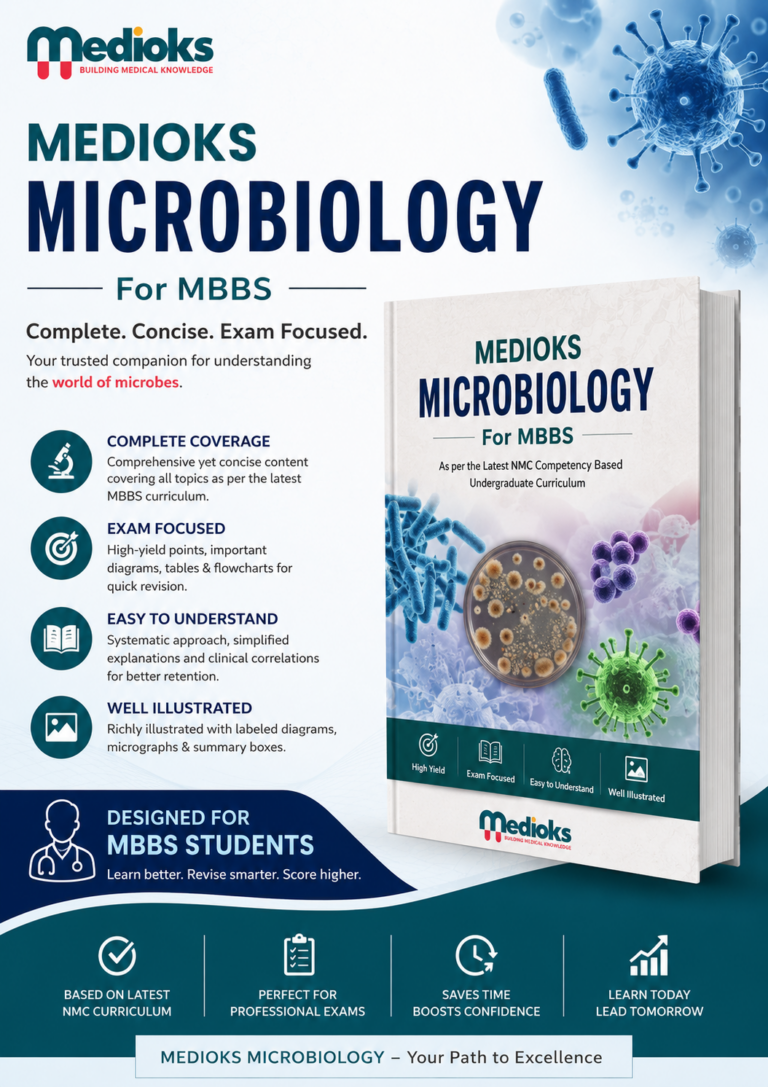
By using trusted textbooks such as Essentials of Medical Microbiology by Apurba Sankar Sastry, Ananthanarayan and Paniker, and a practical microbiology manual, students can build strong concepts, perform confidently in practical examinations, and develop the clinical reasoning skills required of every successful doctor.
Explore the complete guide to the MBBS Microbiology subject,