What Are the Best Medical Books Recommended by Top Rankers?
Every MBBS student eventually faces the same question: Which medical books should I actually study?
The problem is rarely a shortage of recommendations. For almost every subject, students may find standard textbooks, Indian author books, international references, review manuals, question banks, coaching notes, and digital resources.
High-performing students generally succeed not because they own the largest collection of books, but because they choose a limited number of reliable resources and revise them consistently.
Quick answer: The best medical books commonly preferred by high-performing MBBS students include established resources such as BD Chaurasia for Anatomy, Guyton and Hall for Physiology, Robbins for Pathology, K.D. Tripathi for Pharmacology, Paniker or Apurba Sastry for Microbiology, Hutchison or Macleod for Clinical Methods, Davidson for Medicine, and established undergraduate textbooks for Surgery, Paediatrics, and Obstetrics and Gynaecology.
However, there is no universal “topper book list.” The right choice depends on your curriculum, university examination pattern, learning style, available study time, and long-term academic goals.
The Top-Ranker Book Strategy: One Core Resource, Multiple Revisions
One of the most useful lessons from high-performing students is simple:
Do not confuse collecting resources with studying.
A practical strategy is:
One core textbook → Class notes → Active recall → Question practice → Repeated revision
Using five books for the same subject can create information overload. A strong primary resource, supplemented only when necessary, is often more effective.
Best Anatomy Books for MBBS Students
BD Chaurasia’s Human Anatomy
BD Chaurasia is widely used by Indian medical students because of its structured organization and undergraduate-friendly presentation.
Why Students Choose It
- Systematic explanations
- Useful diagrams
- Region-wise organization
- Suitable for regular study and revision
For many students, it works well as a primary anatomy resource.
Gray’s Anatomy for Students
Students looking for deeper conceptual explanations and visual learning may use Gray’s Anatomy for Students as a supplementary resource.
Best approach: Use a manageable core book consistently and consult larger references selectively.
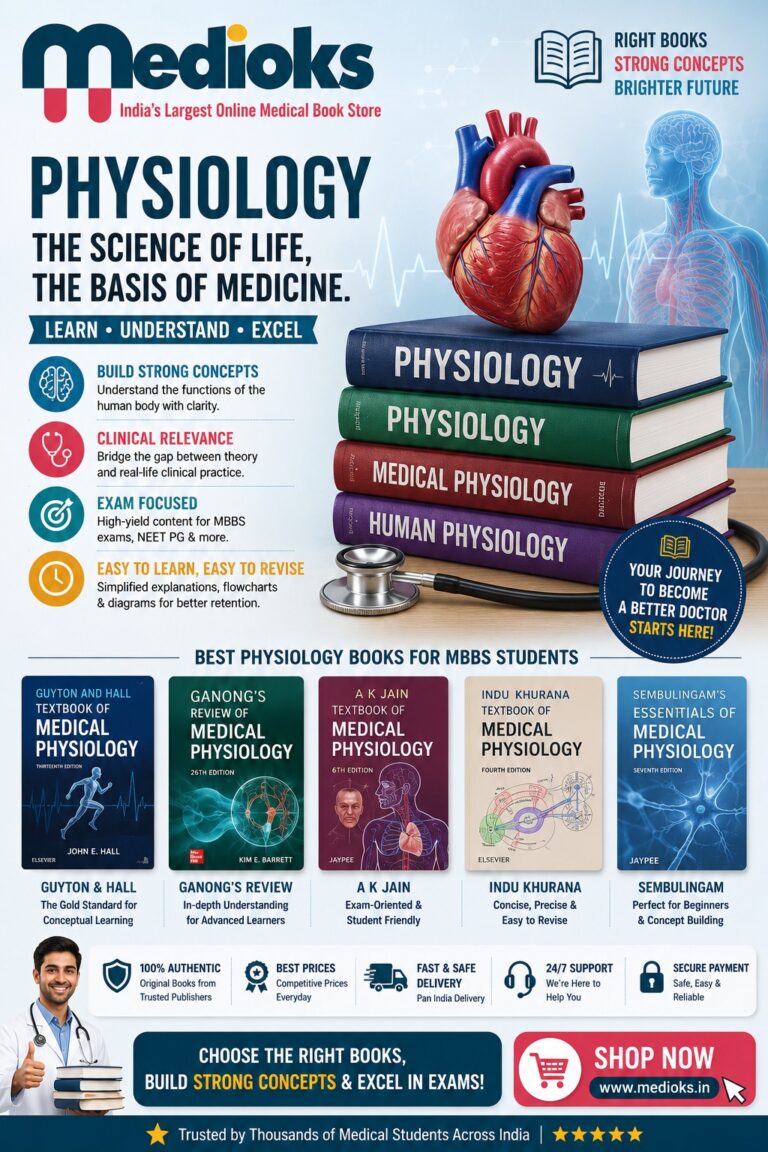
Best Physiology Book: Guyton and Hall
Guyton and Hall Textbook of Medical Physiology is widely valued for explaining physiological mechanisms.
Why High-Performing Students Use It
It helps students understand why physiological processes occur, rather than simply memorizing isolated facts.
It can be especially useful for:
- Conceptual learning
- Building a foundation for clinical medicine
- Understanding mechanisms
Students with limited time may use selective reading alongside a more concise university-oriented resource.
Best Biochemistry Books
The ideal biochemistry book should make complex pathways understandable.
Look for resources that clearly explain:
- Metabolism
- Molecular biology
- Clinical biochemistry
- Vitamins and minerals
- Enzymes
The best choice varies between universities, so students should consider faculty recommendations and their preferred level of detail.
The key is to understand pathways logically rather than memorizing disconnected reactions.
Best Pathology Book: Robbins
Robbins Basic Pathology
Robbins is one of the most recognized pathology textbooks among medical students.
Why Is Robbins Recommended?
It explains:
- Mechanisms of disease
- Cellular injury
- Inflammation
- Neoplasia
- Systemic pathology
Robbins is particularly useful for building conceptual understanding.
However, students preparing for university examinations may also use a concise supplementary resource for faster revision.
Effective strategy: Understand from a standard textbook and revise from a concise source.
Best Pharmacology Book: K.D. Tripathi
Essentials of Medical Pharmacology by K.D. Tripathi is commonly used by Indian MBBS students.
A good pharmacology book should help students organize information using:
Drug Class → Mechanism → Indications → Adverse Effects → Contraindications
Pharmacology becomes easier when students focus on mechanisms and drug relationships rather than memorizing long lists without context.
Best Microbiology Books: Paniker vs Apurba Sastry
Two commonly considered resources are:
- Ananthanarayan and Paniker’s Textbook of Microbiology
- Essentials of Medical Microbiology by Apurba Sankar Sastry
Paniker Microbiology
Often selected by students who prefer a traditional, comprehensive microbiology textbook.
Apurba Sastry
Often considered by students who prefer a structured presentation with strong clinical and diagnostic orientation.
Which is better?
There is no universal winner. Choose the book whose organization helps you understand and revise consistently.
Avoid purchasing multiple microbiology textbooks unless you genuinely need supplementary explanations.
Best Book for Clinical Methods
Clinical examination is where textbook knowledge begins connecting with real patients.
Two widely recognized books are:
Hutchison’s Clinical Methods
Useful for understanding:
- History taking
- Physical examination
- Clinical reasoning
- Bedside approach
Macleod’s Clinical Examination
Another respected resource offering a structured approach to clinical examination.
Do you need both? Usually not.
Choose one primary clinical methods book and apply what you learn during supervised clinical postings.
Best Medicine Book: Davidson
Davidson’s Principles and Practice of Medicine is widely used as an undergraduate medicine textbook.
It offers a balance between:
- Core medical concepts
- Clinical presentation
- Investigation
- Management principles
Students should remember that clinical recommendations evolve. For current practice, textbooks should be supplemented by authoritative and up-to-date institutional or professional guidance.
Best Books for Surgery
For undergraduate surgery, students should choose a book that clearly connects:
Symptoms → Clinical Examination → Investigation → Diagnosis → Management
A useful surgery textbook should also provide:
- Clear clinical photographs or diagrams
- Structured differential diagnosis
- Basic operative principles
- Exam-oriented organization
The exact choice may vary significantly by institution and faculty preference.
Best Books for Obstetrics and Gynaecology
Books associated with D.C. Dutta are widely used by Indian medical students for obstetrics and gynaecology.
Students should prioritize resources that clearly explain:
- Pregnancy and antenatal care
- Labour
- Obstetric complications
- Common gynaecological conditions
- Clinical assessment
Choose a current suitable edition and verify alignment with your curriculum.
Best Paediatrics Books
A good paediatrics textbook should provide clear coverage of:
- Growth and development
- Nutrition
- Neonatology
- Common childhood conditions
- Clinical assessment
Students should choose a resource that balances conceptual learning with practical undergraduate requirements.
Do Top Rankers Study Only Standard Textbooks?
Usually, successful students use different resources for different purposes.
| Resource | Best Use |
|---|---|
| Standard Textbook | Conceptual understanding |
| Class Notes | Curriculum alignment |
| Review Book | Rapid revision |
| Question Bank | Exam practice |
| Clinical Exposure | Practical application |
The important principle is resource consistency.
Repeatedly revising one strong source is often more effective than reading multiple books once.
How to Choose Medical Books Like a High-Performing Student
Before purchasing a textbook, ask:
- Does it match my current curriculum?
- Can I realistically complete the relevant sections?
- Does it explain concepts clearly?
- Will I use it repeatedly?
- Is it useful for clinical learning or only one examination?
A practical buying strategy is:
Buy essential core books → Use the library for large references → Borrow before purchasing uncertain choices → Add revision resources later
Where to Buy Medical Books Online
Students can explore specialist medical bookstores and established academic sellers when purchasing textbooks.
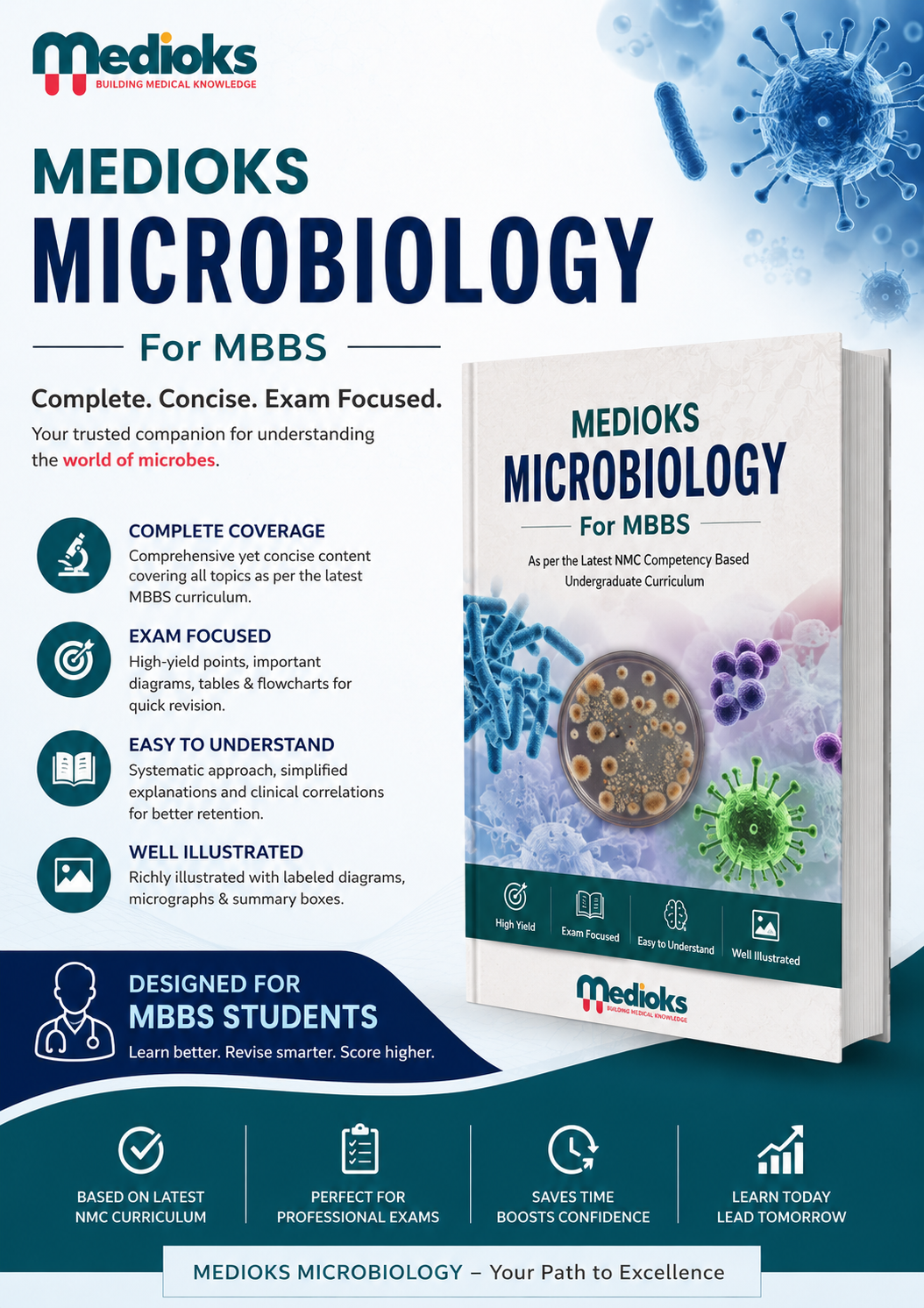
Platforms such as Medioks can be explored for:
- MBBS books
- BDS books
- Nursing books
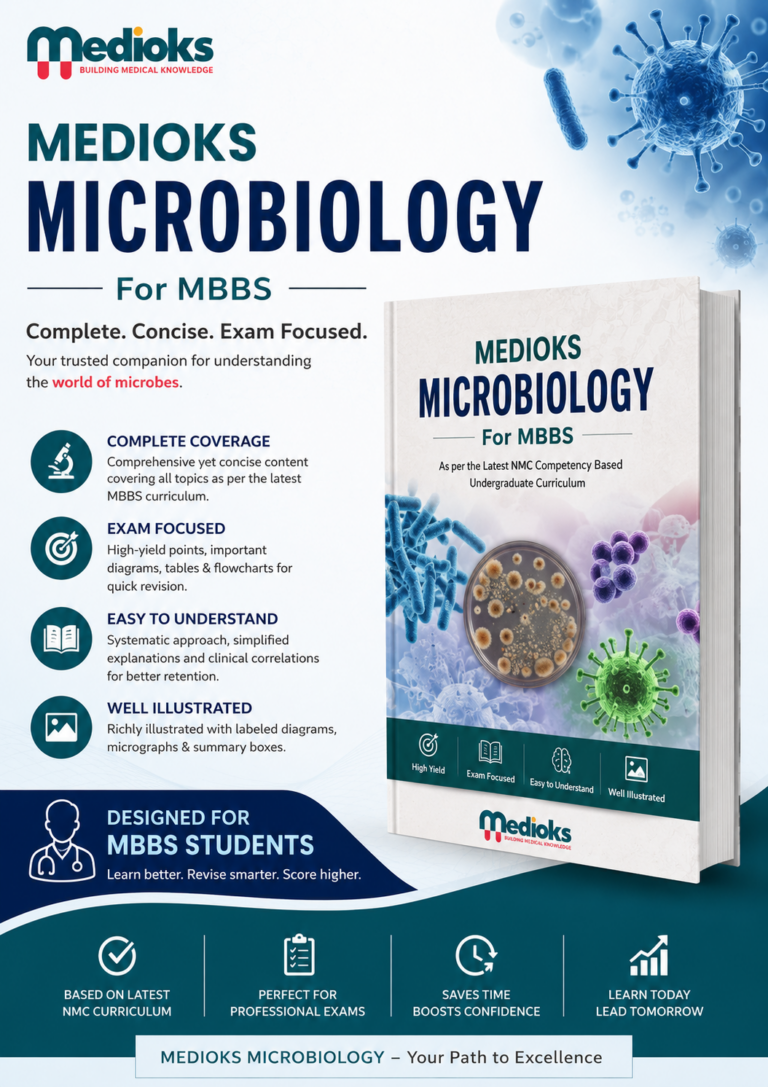
- Microbiology textbooks
- Clinical books
- Medical exam resources
Before ordering, verify the title, author, publisher, edition, and product details.
Frequently Asked Questions
Which medical books do top rankers recommend?
Commonly used books include BD Chaurasia for Anatomy, Guyton for Physiology, Robbins for Pathology, K.D. Tripathi for Pharmacology, Paniker or Apurba Sastry for Microbiology, and Hutchison or Macleod for clinical examination.
Do MBBS toppers read standard textbooks?
Many high-performing students use standard textbooks selectively for conceptual understanding and combine them with notes, revision resources, and question practice.
Is one book enough for each MBBS subject?
For many students, one core textbook per subject is sufficient when supplemented with class notes and selected references.
Should I buy every recommended MBBS textbook?
No. Purchase books you expect to use regularly and access supplementary references through libraries or other legitimate sources when needed.
Which is better: textbooks or coaching notes?
They serve different purposes. Textbooks build conceptual depth, while concise notes can support revision. A balanced approach is usually more effective.
Final Thoughts
The best medical books recommended by top rankers are not defined by a single universal list.
The more important strategy is:
Choose fewer resources → Understand deeply → Revise repeatedly → Practise questions → Apply knowledge clinically
A famous textbook cannot improve performance if it remains unopened.
Choose books that match your curriculum, learning style, examination needs, and long-term clinical development. In medical education, consistency with a reliable resource usually delivers more value than constantly switching to the next recommended book.