Hutchison vs Macleod Clinical Examination: Which Book Is Better for Medical Students?
Learning clinical examination is a major transition in medical education. Students move from studying diseases in textbooks to interviewing patients, identifying physical signs, developing differential diagnoses, and presenting clinical findings systematically.
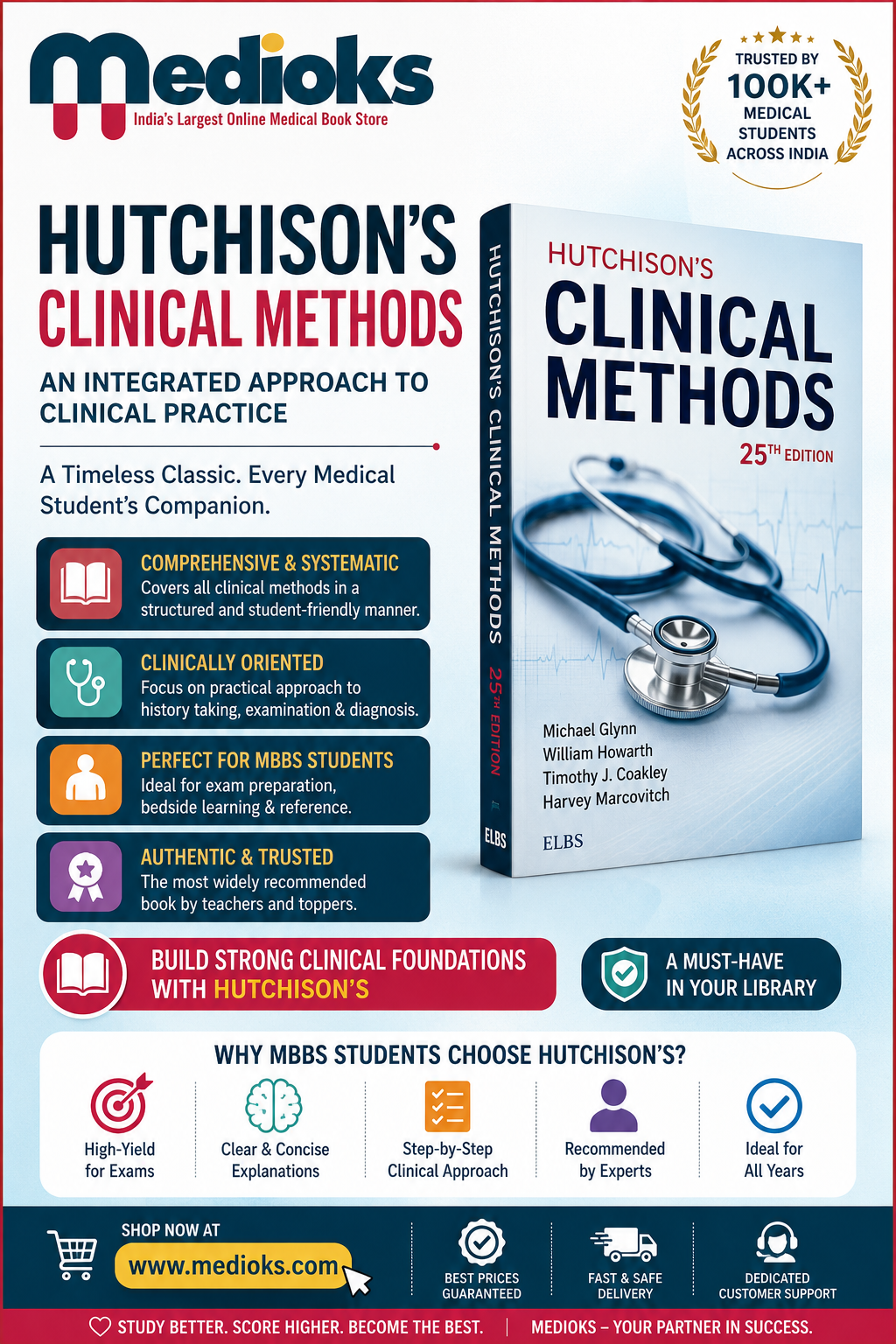
Two widely recognized books for developing these skills are Hutchison’s Clinical Methods and Macleod’s Clinical Examination.
So, Hutchison vs Macleod Clinical Examination—which is better for medical students?
Quick answer: Choose Hutchison’s Clinical Methods if you prefer a traditional, detailed approach to history taking, physical examination, and clinical reasoning. Choose Macleod’s Clinical Examination if you prefer a highly structured, accessible, and visually oriented guide to practical examination techniques.
Both are respected resources. The better choice depends on your learning style, stage of medical training, university expectations, and whether your priority is conceptual clinical reasoning or step-by-step examination technique.
Hutchison vs Macleod: Quick Comparison
| Feature | Hutchison’s Clinical Methods | Macleod’s Clinical Examination |
|---|---|---|
| Primary Strength | Clinical methods and reasoning | Structured examination technique |
| Writing Style | Detailed and traditional | Accessible and systematic |
| Visual Learning | Useful illustrations | Strong visual presentation |
| History Taking | Detailed | Highly structured |
| Physical Examination | Comprehensive | Step-by-step approach |
| Clinical Reasoning | Strong emphasis | Integrated throughout |
| Best For | Deeper clinical understanding | Learning practical examination |
| Revision | Requires selective study | Generally easier for quick review |
What Is Hutchison’s Clinical Methods?
Hutchison’s Clinical Methods is a long-established clinical textbook that focuses on the essential skills required to assess patients.
It commonly covers:
- Communication with patients
- History taking
- General physical examination
- Systemic examination
- Interpretation of clinical signs
- Clinical reasoning
- Investigation principles
- Patient-centred assessment
Its major strength is that it encourages students to think beyond a mechanical checklist.
A clinical examination is not simply:
“Look, feel, tap, and listen.”
The student must understand why a particular question is being asked, why a sign is important, and how findings influence the differential diagnosis.
What Is Macleod’s Clinical Examination?
Macleod’s Clinical Examination is another widely used resource for learning history taking and physical examination.
It is particularly known for its organized and practical presentation.
The book generally guides students through:
- History taking
- General examination
- Cardiovascular examination
- Respiratory examination
- Gastrointestinal examination
- Neurological examination
- Musculoskeletal assessment
- Other focused clinical examinations
Its systematic presentation can make it particularly useful when students are learning examination sequences for the first time.
1. Which Book Is Better for Beginners?
For many beginners, Macleod may feel more approachable because of its structured presentation.
When students first enter clinical postings, they often need clear answers to questions such as:
- Where should I stand?
- What should I inspect?
- What should I palpate?
- In what sequence should I examine the patient?
- How should I report my findings?
A systematic resource can reduce confusion during the early stages of bedside learning.
Hutchison, meanwhile, may appeal more to students who want to understand the broader logic behind clinical assessment.
Verdict
Macleod may be easier for learning examination sequences, while Hutchison is valuable for developing deeper clinical thinking.
2. Which Book Is Better for History Taking?
Both books provide strong guidance, but the learning experience differs.
A good medical history should explore:
- Presenting complaints
- History of the presenting illness
- Past medical history
- Drug history
- Family history
- Personal and social history
- Relevant system-specific information
Hutchison can be particularly valuable for understanding the purpose and clinical significance behind questions.
Macleod provides a structured framework that can help students develop a consistent history-taking routine.
Verdict
Choose Hutchison for depth and Macleod for structure.
3. Which Book Is Better for Physical Examination?
Macleod is particularly strong as a practical examination guide.
Its systematic approach helps students learn the sequence of examination and develop consistent bedside habits.
However, students should remember that physical examination cannot be mastered by reading alone.
The correct learning cycle is:
Read → Observe → Perform → Receive Feedback → Repeat
Hutchison complements this process by helping students understand the clinical meaning of examination findings.
Verdict
For step-by-step physical examination, Macleod may be more immediately practical.
4. Which Book Is Better for Clinical Reasoning?
Clinical reasoning involves combining:
- History
- Physical findings
- Disease probability
- Differential diagnosis
- Investigations
- Clinical context
Hutchison’s broader clinical-method approach can be especially useful for students trying to understand how information gathered at the bedside contributes to diagnostic thinking.
Macleod also integrates clinical interpretation, but its major appeal for many students remains its structured examination framework.
Verdict
Hutchison has a slight advantage for students seeking deeper clinical reasoning and interpretation.
5. Which Book Is Better for MBBS Practical Exams?
The answer depends heavily on your university and department.
Practical examinations may assess:
- History taking
- General examination
- Systemic examination
- Case presentation
- Identification of clinical signs
- Differential diagnosis
- Viva questions
Macleod can help students develop a consistent examination sequence.
Hutchison can help strengthen the reasoning required when examiners ask:
“Why did you perform this test?”
or
“What does this clinical sign indicate?”
Therefore, a combination of structured examination and conceptual understanding is ideal.
6. Which Book Is Better for Visual Learners?
Students often find Macleod particularly useful for visually understanding examination techniques.
Clinical skills require attention to:
- Patient positioning
- Hand placement
- Examination sequence
- Anatomical landmarks
- Observation of signs
Visual explanations can make these techniques easier to understand before practising them at the bedside.
However, illustrations should support—not replace—supervised clinical practice.
Hutchison vs Macleod: Which One Should You Buy?
Choose Hutchison’s Clinical Methods if you:
- Prefer detailed explanations.
- Want stronger clinical reasoning.
- Want to understand the significance of clinical signs.
- Enjoy traditional, comprehensive clinical learning.
- Want a book that supports deeper bedside thinking.
Choose Macleod’s Clinical Examination if you:
- Prefer a structured approach.
- Want clear examination sequences.
- Are beginning clinical postings.
- Learn well through visual guidance.
- Need a practical reference for bedside examination.
Can You Use Both Hutchison and Macleod?
Yes, but reading both completely may not be necessary.
A practical approach is:
One primary clinical methods book + selective reference from the other.
For example:
- Use Macleod to learn examination sequences.
- Consult Hutchison to understand clinical significance and reasoning.
Alternatively, use the book recommended by your department as your primary resource and consult the second only when additional clarification is needed.
How to Study Clinical Examination Effectively
Reading a clinical methods textbook is only the first stage.
Use this method:
1. Read Before the Clinical Posting
Review the examination sequence before seeing patients.
2. Observe a Demonstration
Watch a faculty member or experienced clinician perform the examination.
3. Practise Under Supervision
Perform the examination yourself and request feedback.
4. Present Your Findings
Learn to summarize positive and relevant negative findings.
5. Connect Signs With Diagnoses
Ask:
“What does this finding mean clinically?”
This is where textbook knowledge becomes clinical competence.
Common Mistakes Medical Students Make
Avoid:
- Memorizing examination steps without understanding them.
- Reading clinical methods without practising.
- Ignoring patient comfort and consent.
- Performing tests without knowing their purpose.
- Focusing only on positive findings.
- Using too many books simultaneously.
- Learning only before practical examinations.
Clinical examination is a skill developed through repetition and feedback.
Where to Buy Clinical Examination Books Online
Before purchasing a medical textbook, verify:
- Exact book title
- Author or editorial team
- Latest available edition
- Publisher details
- Format
- Seller authenticity
Students searching for Hutchison’s Clinical Methods, Macleod’s Clinical Examination, and other MBBS clinical books can explore relevant medical textbooks through Medioks.
Always check the edition recommended by your institution or faculty before purchasing.
Frequently Asked Questions
Is Hutchison better than Macleod?
Neither is universally better. Hutchison is often preferred for detailed clinical methods and reasoning, while Macleod is valued for structured, practical examination guidance.
Which is better for MBBS students: Hutchison or Macleod?
Macleod can be easier for beginners learning examination sequences. Hutchison can be particularly useful for deeper clinical understanding.
Is Hutchison enough for clinical examination?
It provides extensive guidance, but no textbook alone is sufficient. Clinical examination must be practised with real patients under appropriate supervision.
Is Macleod good for practical exams?
Yes. Its structured examination approach can help students develop systematic clinical routines, but preparation should also follow local university requirements.
Can I study both Hutchison and Macleod?
Yes. However, using one as your primary book and the other as a selective reference is usually more efficient.
Final Verdict: Hutchison or Macleod?
The Hutchison vs Macleod Clinical Examination comparison comes down to your preferred learning style.
Hutchison’s Clinical Methods is particularly valuable for students who want detailed explanations, interpretation of clinical signs, and deeper clinical reasoning.
Macleod’s Clinical Examination is an excellent option for students who prefer a structured, visually supported, step-by-step approach to bedside examination.
For many medical students, the most effective strategy is to choose one primary textbook, practise regularly at the bedside, and use the second book selectively.
Ultimately, the best clinical examination book is the one that helps you move from simply performing examination steps to understanding what the findings mean for the patient.