Which MBBS Books Are Worth Buying in 2026? A Complete Subject-Wise Guide for Medical Students
Starting MBBS is exciting, but it also comes with one major challenge—choosing the right books. Seniors recommend one set of textbooks, professors suggest another, and online marketplaces offer hundreds of options. As a result, many students spend thousands of rupees on books they barely use.
The reality is simple: you don’t need to buy every medical book available.
Instead, invest in a carefully selected collection of standard textbooks that provide conceptual clarity, support the National Medical Commission (NMC) Competency-Based Medical Education (CBME) curriculum, and remain useful for university exams as well as postgraduate entrance preparation. Recent student-focused guides continue to recommend limiting yourself to one main textbook per subject, adding a revision book only if necessary. (Medioks)
This guide explains which MBBS books are truly worth buying in 2026 and how to build a practical medical library without overspending.
Quick Answer
If you’re building your MBBS library in 2026, prioritize these standard textbooks:
First Year
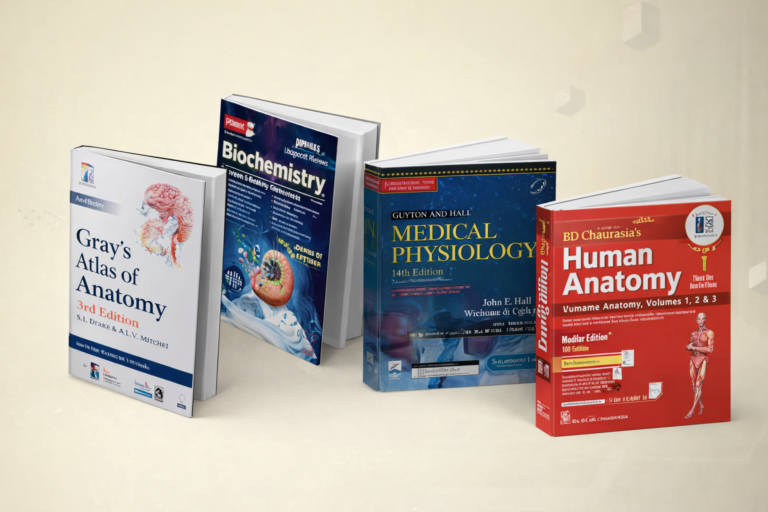
- BD Chaurasia – Human Anatomy
- Vishram Singh – Textbook of Anatomy
- Guyton & Hall – Textbook of Medical Physiology
- GK Pal – Textbook of Physiology
- Lippincott Illustrated Reviews: Biochemistry
- Satyanarayana – Biochemistry
Second Year
- Apurba Sastry – Essentials of Medical Microbiology
- Ananthanarayan & Paniker – Textbook of Microbiology
- Robbins Basic Pathology
- Harsh Mohan – Textbook of Pathology
- KD Tripathi – Essentials of Medical Pharmacology
- Parikh or Reddy – Forensic Medicine
Third Year
- Park – Preventive and Social Medicine
- Dhingra – ENT
- Khurana – Ophthalmology
Final Year
- Archith Boloor – Medicine
- Bailey & Love – Short Practice of Surgery
- SRB Manual of Surgery
- Dutta – Obstetrics & Gynecology
- OP Ghai – Pediatrics
These books remain among the most widely recommended choices for Indian MBBS students. (Medioks)
Why Choosing the Right Books Matters
MBBS is not about collecting dozens of expensive textbooks. It is about learning from reliable resources that help you:
- Build strong medical concepts
- Prepare for university examinations
- Improve clinical reasoning
- Develop practical knowledge
- Prepare for NEET PG and INI-CET
- Reduce unnecessary study stress
Buying fewer but better books is usually a smarter strategy.
Best MBBS Books for First-Year Students
Anatomy
BD Chaurasia’s Human Anatomy
One of the most recommended anatomy books because of:
- Easy language
- Excellent diagrams
- Practical orientation
- Strong university exam support
Vishram Singh’s Textbook of Anatomy
Ideal for students who prefer:
- Detailed explanations
- Clinical correlations
- Modern illustrations
Netter’s Atlas of Human Anatomy
Worth buying if you want exceptional anatomical illustrations for dissections and clinical understanding.
Physiology
Guyton & Hall Textbook of Medical Physiology
Best for:
- Conceptual understanding
- Long-term learning
- Clinical reasoning
GK Pal
Excellent for:
- University examinations
- Simple explanations
- Quick revision
Biochemistry
Recommended books include:
- Lippincott Illustrated Reviews: Biochemistry
- Satyanarayana Biochemistry
- Vasudevan Biochemistry
These books balance concept building with exam-oriented preparation.
Best Books Worth Buying for Second-Year MBBS
Second year introduces subjects that build the foundation of clinical medicine.
Microbiology
Recommended books:
- Apurba Sastry’s Essentials of Medical Microbiology
- Ananthanarayan & Paniker’s Textbook of Microbiology
Apurba Sastry is often preferred for university exams, while Ananthanarayan offers more detailed conceptual coverage.
Pathology
Worth investing in:
Robbins Basic Pathology
Internationally respected for:
- Disease mechanisms
- Clinical integration
- Excellent illustrations
Harsh Mohan
Popular because of:
- Student-friendly language
- University-focused approach
- High-yield content
Pharmacology
KD Tripathi Essentials of Medical Pharmacology
Still regarded as one of the most reliable pharmacology textbooks because it combines clear explanations with clinical relevance.
Forensic Medicine
Commonly recommended books include:
- Parikh’s Textbook of Medical Jurisprudence
- Reddy’s Essentials of Forensic Medicine
Choose the one recommended by your university.
Best Books for Third-Year MBBS
Third year shifts toward community medicine and clinical specialties.
Community Medicine
- Park’s Textbook of Preventive and Social Medicine
ENT
- Dhingra’s Diseases of Ear, Nose and Throat
Ophthalmology
- Khurana Comprehensive Ophthalmology
These books are concise, exam-oriented, and widely used across Indian medical colleges. (Medioks)
Best Books for Final-Year MBBS
Final year focuses heavily on patient care and clinical decision-making.
Medicine
- Archith Boloor
- Harrison’s Principles of Internal Medicine (Reference)
Surgery
- Bailey & Love’s Short Practice of Surgery
- SRB Manual of Surgery
Obstetrics & Gynecology
- Dutta’s Textbook of Obstetrics & Gynecology
Pediatrics
- OP Ghai Essential Pediatrics
Most educators recommend one standard textbook plus one concise revision book if needed. (Medioks)
Should You Buy Standard Textbooks or Review Books?
The answer depends on your stage of learning.
Buy Standard Textbooks If You Want:
- Strong concepts
- Clinical understanding
- Long-term knowledge
- Better patient care
Buy Review Books If You Need:
- Quick revision
- Previous year questions
- NEET PG preparation
- Last-minute study support
Review books should supplement—not replace—standard textbooks.
Printed Books or eBooks?
Both formats have advantages.
Printed Books
Best for:
- Long study sessions
- Highlighting
- Margin notes
- Better concentration
eBooks
Useful for:
- Traveling
- Quick searches
- Mobile revision
- Instant access
Many successful MBBS students use printed books for primary study and eBooks for revision.
Tips Before Buying MBBS Books
Before purchasing:
- Check your college’s prescribed book list.
- Buy the latest available edition when appropriate.
- Choose one standard textbook per subject.
- Avoid buying multiple reference books immediately.
- Purchase only authentic editions.
- Invest in books you’ll continue using during internships and postgraduate preparation.
A carefully planned library is more valuable than an oversized collection.
Why Buying Genuine Medical Books Matters
Original textbooks offer:
- Updated medical guidelines
- Better print quality
- Accurate illustrations
- Durable binding
- Reliable content
Avoid pirated copies and unauthorized PDFs, as they may contain missing pages, poor image quality, or outdated information.
Where to Buy Authentic MBBS Books
Choosing a reliable bookstore is just as important as choosing the right textbook.
Many MBBS students purchase their books from Medioks, which offers a wide range of authentic medical textbooks across Anatomy, Physiology, Biochemistry, Microbiology, Pathology, Pharmacology, Medicine, Surgery, Pediatrics, Obstetrics & Gynecology, and other subjects. Subject-wise collections and access to current editions make it easier for students to build a complete MBBS library.
Frequently Asked Questions
Which MBBS books should every student buy?
Students should begin with one standard textbook for each subject rather than purchasing multiple reference books.
Are expensive international books necessary?
Not always. International books are excellent references, but many Indian textbooks are well aligned with the CBME curriculum and university examinations.
Should I buy the latest editions?
Yes, especially when there are significant syllabus updates or revised clinical guidelines.
Are eBooks enough for MBBS?
eBooks are excellent supplementary resources, but many students still prefer printed textbooks for detailed study and note-making.
Can one textbook be enough for each subject?
For most students, one standard textbook is sufficient. Additional review books can be added later if required.
Conclusion
Choosing the right MBBS books in 2026 is about quality, not quantity. A thoughtfully selected collection of standard textbooks can support you from your first anatomy lecture to your final clinical postings and even postgraduate entrance preparation.
Instead of buying every book recommended online, focus on one trusted textbook for each subject, supplement it with revision resources when necessary, and invest in authentic editions that will serve you throughout your medical journey.
Building your library wisely today can save money, reduce confusion, and provide a strong academic foundation for years to come.